The main subject of these posts is about Obsolete software and file formats. I prefer to focus on older software titles and collect them when I can. I have also found older Macintosh software to be particularly interesting as many of the qualities of early Macintosh use is lost today. In researching a very early Macintosh title, I came across an article from 1999 written by the Washington Post, the article, now 26 years old, was already commenting about “antique” software which was less than 20 years old at the time. Is there a term for even more antique? The title of the article? “Old Enthusiasts Are Scouring the Web to Find ‘Antique’ Software”. I feel this hasn’t changed, I still scour the web to find old software, and if the enthusiasts were “old” 26 years ago, then I am ancient.
Back in 1983, a little company called Living Videotext run by Dave Winer, who had developed a couple products for the Apple II, saw an opportunity to bring their product to the Macintosh. Their product, ThinkTank, was the fourth title to ship for the new Macintosh released in 1984.
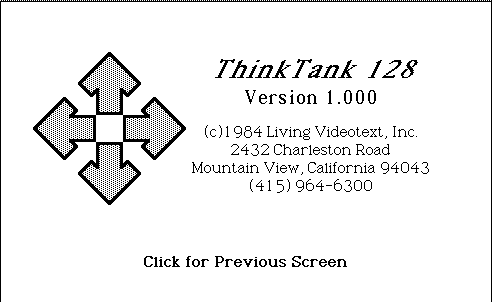
Thinktank was an “idea processor“, not a word processor, but “a tool for organizing your thoughts on a computer screen. You could create an outline, then indent, move an item up a list, or out a level. Flesh out the details, and quickly record a top-level idea you had overlooked.” It was the beginning of outliner tools created by the company.
% hexdump -C Sample | head
00000000  2e 48 45 41 44 20 30 20  2b 20 20 4d 61 6a 6f 72  |.HEAD 0 +  Major|
00000010  20 4c 65 61 67 75 65 20  42 61 73 65 62 61 6c 6c  | League Baseball|
00000020  20 54 65 61 6d 73 0d 2e  48 45 41 44 20 31 20 2b  | Teams..HEAD 1 +|
00000030  20 20 4c 65 61 67 75 65  73 20 61 6e 64 20 44 69  |  Leagues and Di|
00000040  76 69 73 69 6f 6e 73 0d  2e 48 45 41 44 20 32 20  |visions..HEAD 2 |
00000050  2b 20 20 41 6d 65 72 69  63 61 6e 20 4c 65 61 67  |+  American Leag|
00000060  75 65 0d 2e 48 45 41 44  20 33 20 2b 20 20 57 65  |ue..HEAD 3 +  We|
00000070  73 74 65 72 6e 20 44 69  76 69 73 69 6f 6e 0d 2e  |stern Division..|
00000080  48 45 41 44 20 34 20 2d  20 20 43 61 6c 69 66 6f  |HEAD 4 -  Califo|
00000090  72 6e 69 61 20 41 6e 67  65 6c 73 0d 2e 48 45 41  |rnia Angels..HEA|
The files created by ThinkTank are plain text with the ASCII “HEAD”. There was also a DOS version of ThinkTank, but the files used were .DB and .SAV, although the templates in the .TXT format did use this same format.
% hexdump -C SAMPLE.TXT | head
00000000  2e 48 45 41 44 20 30 20  2b 20 20 50 65 72 66 6f  |.HEAD 0 +  Perfo|
00000010  72 6d 61 6e 63 65 20 52  65 76 69 65 77 0d 0a 2e  |rmance Review...|
00000020  48 45 41 44 20 31 20 2d  20 20 4e 61 6d 65 3a 20  |HEAD 1 -  Name: |
00000030  0d 0a 2e 48 45 41 44 20  31 20 2d 20 20 4a 6f 62  |...HEAD 1 -  Job|
00000040  20 54 69 74 6c 65 3a 20  0d 0a 2e 48 45 41 44 20  | Title: ...HEAD |
00000050  31 20 2d 20 20 52 65 76  69 65 77 20 44 61 74 65  |1 -  Review Date|
00000060  3a 20 0d 0a 2e 48 45 41  44 20 31 20 2d 20 20 52  |: ...HEAD 1 -  R|
00000070  65 76 69 65 77 20 70 65  72 69 6f 64 20 66 6f 72  |eview period for|
00000080  3a 20 0d 0a 2e 48 45 41  44 20 31 20 2b 20 20 4f  |: ...HEAD 1 +  O|
00000090  62 6a 65 63 74 69 76 65  73 20 4d 65 74 2f 4e 6f  |bjectives Met/No|
Turns out this was a special format they called “dot-head“, aptly named for the head of the file. It was used as an interchange format to move outlines between ThinkTank, another program called Ready!, and the later product MORE.
MORE was developed to be multiple tools in one. Meant to “Unite idea processing technology with the desktop publishing revolution“. MORE replaced ThinkTank in 1986 and promised more flexibility by creating charts and presentations quickly from your outline. MORE used the same dot-head format initially, also the ASCII could be in lowercase.
% hexdump -C MORE1 | head
00000000  2e 68 65 61 64 20 30 20  2b 20 20 48 6f 6d 65 0d  |.head 0 +  Home.|
00000010  2e 68 65 61 64 20 31 20  2d 20 20 0d 2e 68 65 61  |.head 1 -  ..hea|
00000020  64 20 31 20 2d 20 20 54  65 73 74 69 6e 67 0d 2e  |d 1 -  Testing..|
00000030  68 65 61 64 20 31 20 2d  20 20 0d                 |head 1 -  .|
In 1987 Living Videotext was purchased by Symantec. Shortly after Symantec released MORE II and a rebranded DOS application called GrandView based on ThinkTank.
Let’s take a look at GrandView, it was built from the DOS version of ThinkTank and compatible with the same formats. It had great reviews at the time and provided the first outliner for Symantec. It was written by the developer, John Friend, who created PC Outline which was often bundled with WordStar.
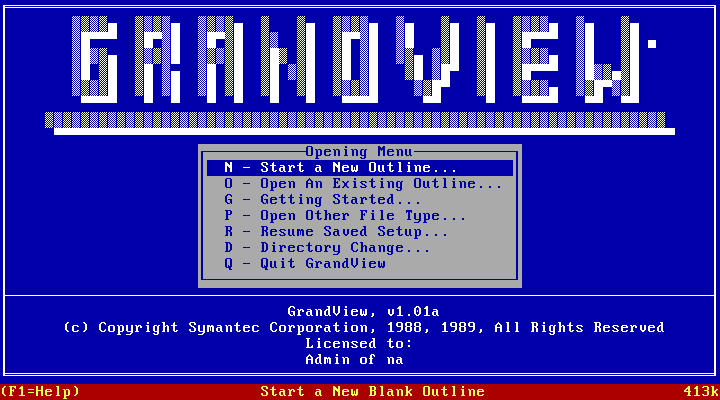
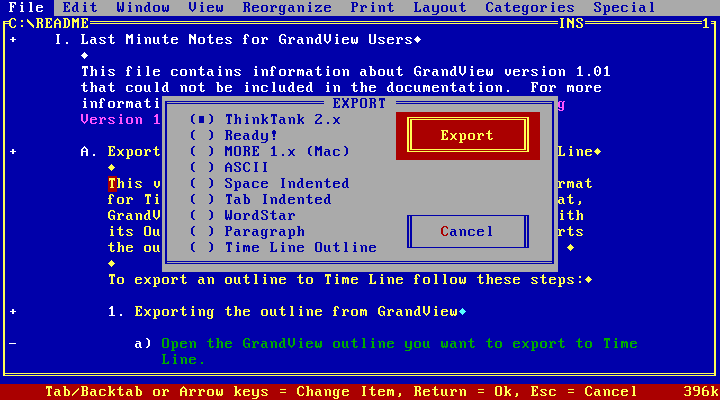
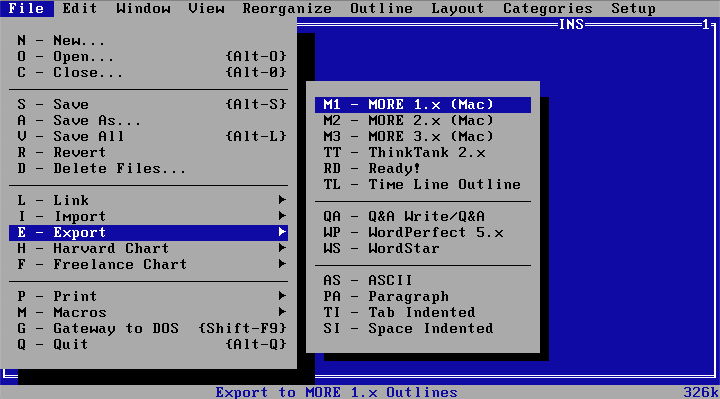
GrandView could import and export into any of the other products.
GrandView version 1 went with a new file format.
% hexdump -C PROJECT.GV | head
00000000  0b 00 01 00 1a 4a 4c 46  5f 49 44 06 00 02 00 01  |.....JLF_ID.....|
00000010  01 0a 00 03 00 16 00 26  00 2c 00 05 00 05 00 78  |.......&.,.....x|
00000020  06 00 07 00 ff ff 06 00  1a 00 01 00 26 00 08 00  |............&...|
00000030  26 00 ee 4d 02 00 00 00  c0 a8 00 00 00 00 00 00  |&..M............|
00000040  01 00 00 00 00 00 01 00  00 00 00 00 00 00 00 01  |................|
00000050  00 00 22 00 0a 00 20 1c  00 00 20 1c 00 00 d0 b6  |.."... ... .....|
00000060  00 00 10 ef 00 00 20 1c  00 00 20 1c 00 00 60 35  |...... ... ...`5|
00000070  01 00 01 00 05 00 10 00  62 15 00 13 00 cc 93 88  |........b.......|
00000080  10 54 54 59 2e 50 44 56  00 00 00 00 00 00 2c 00  |.TTY.PDV......,.|
00000090  1c 00 00 00 00 00 00 00  00 00 00 00 00 00 00 00  |................|
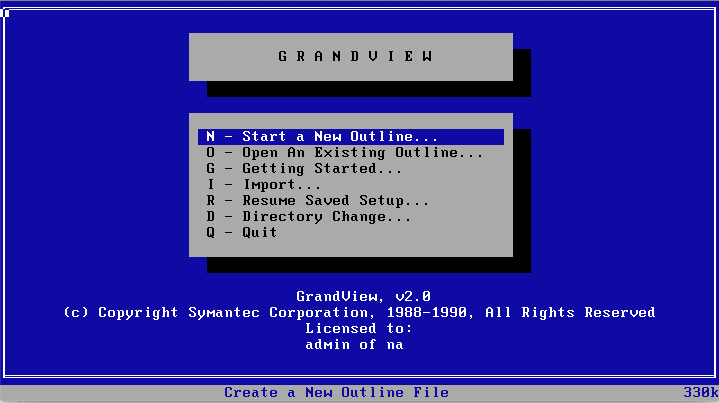
GrandView 2.0 also used the same format.
% hexdump -C TEST.GV | head
00000000  0b 00 01 00 1a 4a 4c 46  5f 49 44 06 00 02 00 01  |.....JLF_ID.....|
00000010  02 0a 00 03 00 02 00 2b  00 3a 00 05 00 05 00 78  |.......+.:.....x|
00000020  06 00 07 00 ff ff 26 00  08 00 2b 00 d5 3e 02 00  |......&...+..>..|
00000030  00 00 d0 b6 00 00 00 00  00 00 01 00 00 00 00 00  |................|
00000040  01 00 00 00 00 00 00 00  00 01 00 00 22 00 0a 00  |............"...|
00000050  20 1c 00 00 20 1c 00 00  d0 b6 00 00 10 ef 00 00  | ... ...........|
00000060  20 1c 00 00 20 1c 00 00  60 35 01 00 01 00 05 00  | ... ...`5......|
00000070  10 00 60 15 00 13 00 9b  5d 83 14 48 50 4c 33 2e  |..`.....]..HPL3.|
00000080  50 44 56 00 00 00 00 00  2c 00 1c 00 00 00 00 00  |PDV.....,.......|
00000090  00 00 00 00 00 00 00 00  00 00 00 00 00 00 00 00  |................|
GrandView was also compatible with the Macintosh counterpart, MORE.
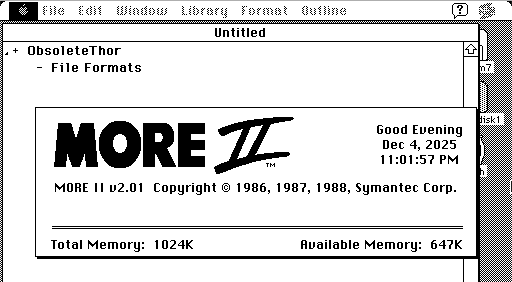
Symantec then released a new version of the MORE software for the Macintosh in 1988, adding new presentation features. MORE II went away from the dot-head format and used a new proprietary format.
% hexdump -C MORE2-s01 | head
00000000  00 03 4d 52 49 49 00 80  00 00 00 80 00 00 00 78  |..MRII.........x|
00000010  00 00 00 00 00 00 00 00  00 00 00 f8 00 00 00 a8  |................|
00000020  00 00 01 a0 00 00 00 28  00 00 01 c8 00 00 00 18  |.......(........|
00000030  00 00 01 e0 00 00 00 00  00 00 01 e0 00 00 00 0c  |................|
00000040  00 00 01 ec 00 00 00 0c  00 00 01 e0 00 00 00 00  |................|
00000050  00 00 00 00 00 00 00 00  00 00 00 00 00 00 00 00  |................|
*
00000080  00 03 00 00 00 48 00 48  00 00 00 00 02 d8 02 28  |.....H.H.......(|
00000090  ff e1 ff e2 02 f9 02 46  03 47 05 28 03 fc 00 02  |.......F.G.(....|
000000a0  00 00 00 48 00 48 00 00  00 00 02 d8 02 28 00 01  |...H.H.......(..|
Then in 1990 Symantec released MORE 3.0 with even more features and improvements to the user experience. Also adding a companion tool, MORE Graph.
% hexdump -C MORE3-s01 | head
00000000  00 06 4d 4f 52 33 00 80  00 00 00 80 00 00 00 78  |..MOR3.........x|
00000010  00 00 00 f8 00 00 01 b4  00 00 02 ac 00 00 00 a8  |................|
00000020  00 00 11 16 00 00 00 32  00 00 11 48 00 00 00 20  |.......2...H... |
00000030  00 00 11 68 00 00 00 00  00 00 11 68 00 00 00 10  |...h.......h....|
00000040  00 00 11 83 00 00 00 0c  00 00 11 68 00 00 00 00  |...........h....|
00000050  00 00 00 00 00 00 03 54  00 00 0d c2 00 00 11 78  |.......T.......x|
00000060  00 00 00 0b 00 00 00 00  00 00 00 00 00 00 00 00  |................|
00000070  00 00 00 00 00 00 00 00  00 00 00 00 00 00 00 00  |................|
00000080  00 03 00 00 00 48 00 48  00 00 00 00 02 d8 02 28  |.....H.H.......(|
00000090  ff e1 ff e2 02 f9 02 46  03 47 05 28 03 fc 00 02  |.......F.G.(....|
The MORE 3 format got a new header but appears similar in structure to the previous version. And the new companion tool MORE Graph had yet another format.
% hexdump -C MORE3-graph | head
00000000  00 01 00 00 01 09 00 00  00 0c 00 01 09 19 80 00  |................|
00000010  01 09 54 65 73 74 00 00  00 07 00 01 00 03 00 00  |..Test..........|
00000020  00 0b 00 00 00 00 00 00  00 00 00 00 00 00 00 00  |................|
00000030  00 00 00 00 00 00 00 00  00 00 00 00 00 00 00 00  |................|
*
00000610  00 00 00 00 00 00 00 01  06 47 65 6e 65 76 61 00  |.........Geneva.|
00000620  00 00 00 00 00 00 00 00  00 00 00 00 00 00 00 00  |................|
*
00000670  01 00 00 1f ca 33 a0 00  2b 00 04 02 d8 03 d8 09  |.....3..+.......|
00000680  57 6f 72 6b 73 68 65 65  74 00 00 00 00 00 00 00  |Worksheet.......|
Luckily these early Macintosh based formats didn’t use a resource fork, making them fully compatible with their PC counterpart.
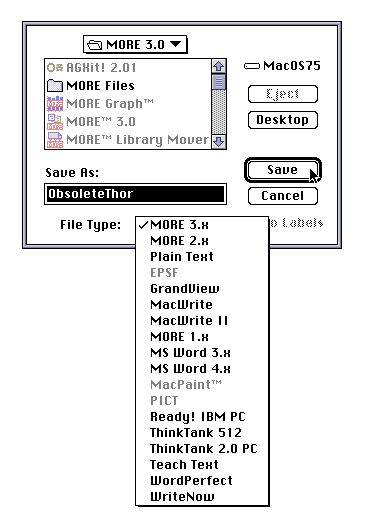
One of the coolest parts of this long list of outline software, is that years later, after Symantec discontinued the product, the original creator, Dave Winer, petitioned Symantec to allow him to release the antique software free and clear to the public. How cool is that? I would really like to see this happen more as other software titles die and get swept under the rug leaving the community to try and find copies, preserve them and make sense of the formats. Not only were the early versions made available, a tool was built to migrate the MORE format to more open XML, allowing the ideas trapped in these ancient formats to be re-imagined.
MORE 3.1 was the final version of the software to be released by Symantec. The files produced by MORE 3.1 have an identical header to the standard 3.0 version. Probably only need one signature for the two versions.
% hexdump -C MORE31-s01 | head
00000000  00 06 4d 4f 52 33 00 80  00 00 00 80 00 00 00 78  |..MOR3.........x|
00000010  00 00 00 f8 00 00 01 b4  00 00 02 ac 00 00 00 a8  |................|
00000020  00 00 11 16 00 00 00 32  00 00 11 48 00 00 00 20  |.......2...H... |
00000030  00 00 11 68 00 00 00 00  00 00 11 68 00 00 00 10  |...h.......h....|
00000040  00 00 11 83 00 00 00 0c  00 00 11 68 00 00 00 00  |...........h....|
00000050  00 00 00 00 00 00 03 54  00 00 0d c2 00 00 11 78  |.......T.......x|
00000060  00 00 00 0b 00 00 00 00  00 00 00 00 00 00 00 00  |................|
00000070  00 00 00 00 00 00 00 00  00 00 00 00 00 00 00 00  |................|
00000080  00 03 00 00 00 48 00 48  00 00 00 00 02 d8 02 28  |.....H.H.......(|
00000090  ff e1 ff e2 02 f9 02 46  03 47 05 28 03 fc 00 02  |.......F.G.(....|
If you would like to try out the MORE software, download this disk image, and drag onto the Macintosh emulator below. The image will automatically mount and you should be able to take MORE 3.1 for a spin!
Outlining software still has a good place in idea generation and presentation. OmniOutliner can probably trace its roots to these “Antique” titles! Stay tuned for some PRONOM signatures to go along with these many format examples. For now you can gather some of the samples from my Github page.