In honor of the 25th of May, aka #525FloppyDay, I have a few thoughts on 5.25″ Floppy Disks, more specifically, the sleeves that protect them.
This year marks the 50th anniversary of the 5.25″ Floppy Disk. Prior to 1976, Floppy Disks were a massive 8 inches square which also used sleeves. It wasn’t until the need to make the disk smaller or “mini-diskette” in 1976 that the media became more popular and used in most desktop computers systems in the 1980’s. I won’t get into all the different ways data was encoded on these diskette’s as that is a massive topic, so today we will look at an often overlooked feature of the media. The protective sleeve.
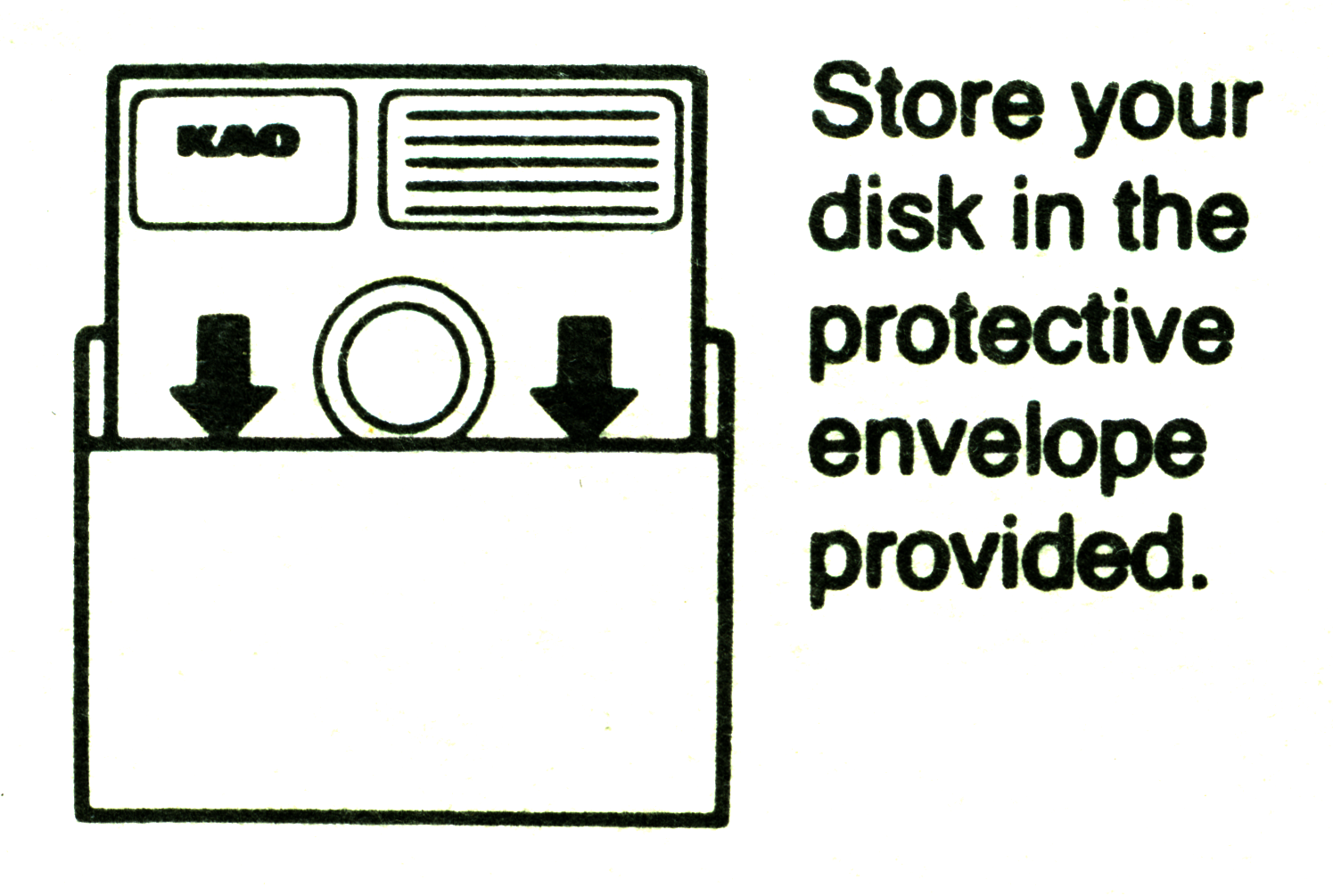 For the sake of consistency, I will call this protection a sleeve, but may also be referred to as an envelope, jacket, or a pouch. Pouch being used by the folks down-under. The sleeve was mainly used for storage of the disk, but was also a great marketing tool and on the backside a reminder of the proper care of the disk. Floppy disk manufacturers and software companies would use the sleeve to print their logo and other important information about the disk, some opting for blank or generic graphics. Today we will look at some of the creative and not so creative uses.
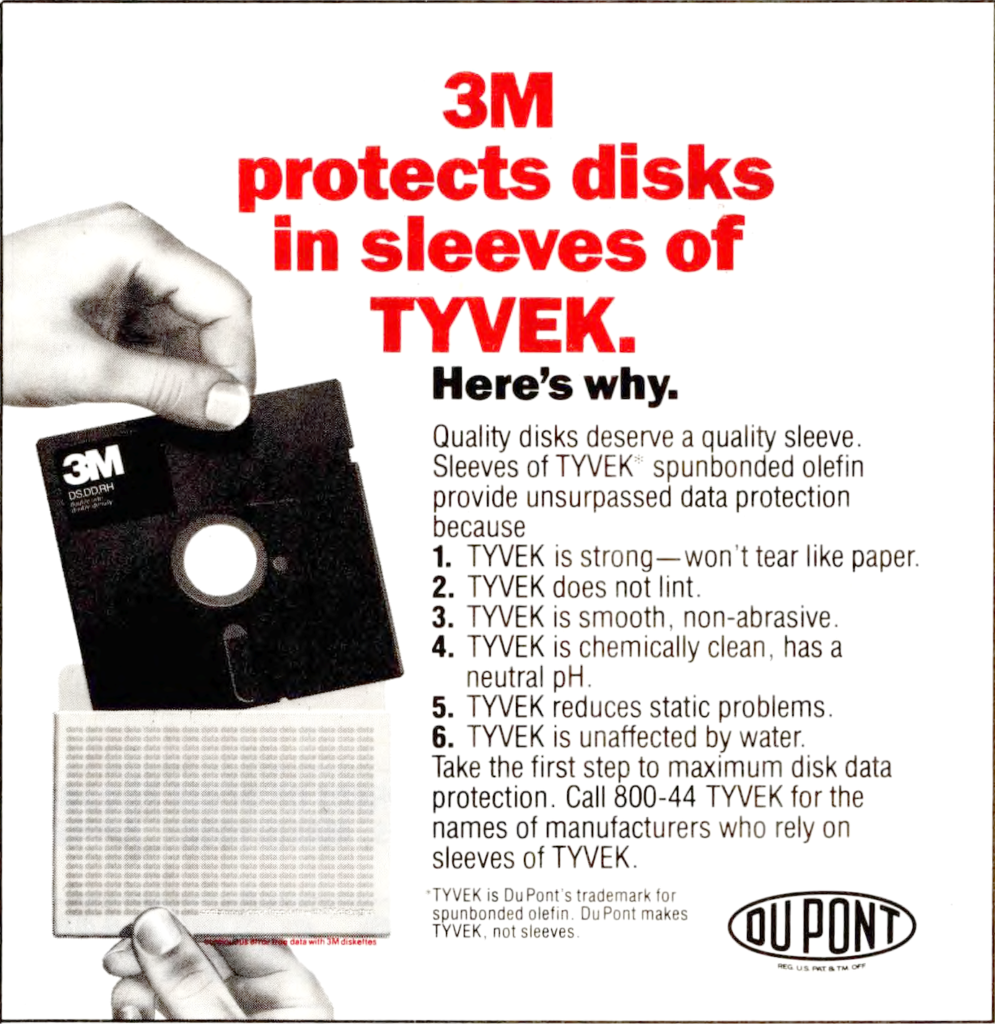
Sleeves for floppy disks were made of a few different types of material. Plain paper sleeves were very common, many of which have yellowed over time. Some were very thin, others quite thick to offer more protection. One type of material often used for a sleeve is called Olefin. Kind of a cross between paper and plastic, this spun bonded material was used by many manufactures because of this superior durability an its ability repel water. This material made by Dupont was named Tyvek and has many uses, one use being found protecting the walls of your home.
As far as I know there is no “archive” documenting all floppy disk sleeves. There is a website called the Original Disk Sleeve Archive started years ago and has many sleeves referenced, but hasn’t been updated in awhile. Jason Scott at the Internet Archive has also uploaded scans he has made, here and here.
Today I would like to share my collection of Sleeves with you. I scanned them myself from my collection at a massive 1200 dpi so you can explore all the details and find creative uses for them.
You will find most of the sleeves have a logo or name on the front, but the back may have some interesting icons. These icons helped remind us of the fragile nature of floppy disks and the care needed to make them last. The icons can be understood without any explanation, using familiar images. Some having the typical circle with a line through it, indicating to NOT do something, others would use simple words in a few languages to get the meaning across. Then you have some who decided to go with humor or clever phrases to get the message across. In all, the messages were clear and understood, but as the floppy disk lost its usefulness over time, the icons and messages disappeared to time as well.
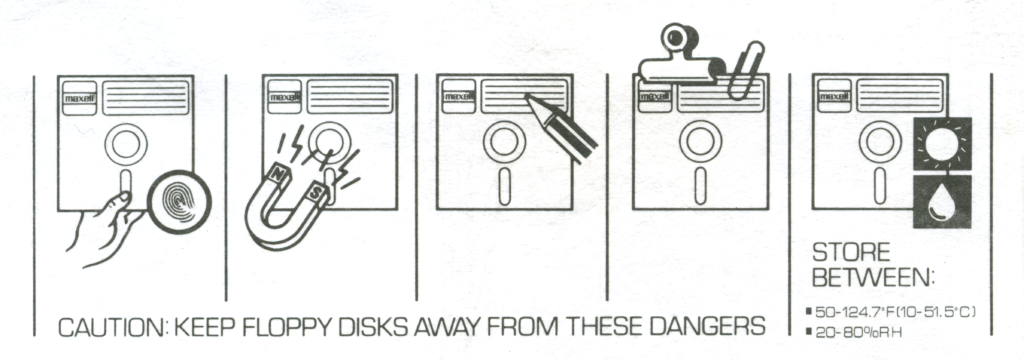
You might noticed many of the different sleeves in my collection have a common set of icons, which were probably bought instead of designing their own by many companies. Others spent some time and effect into designing their own.
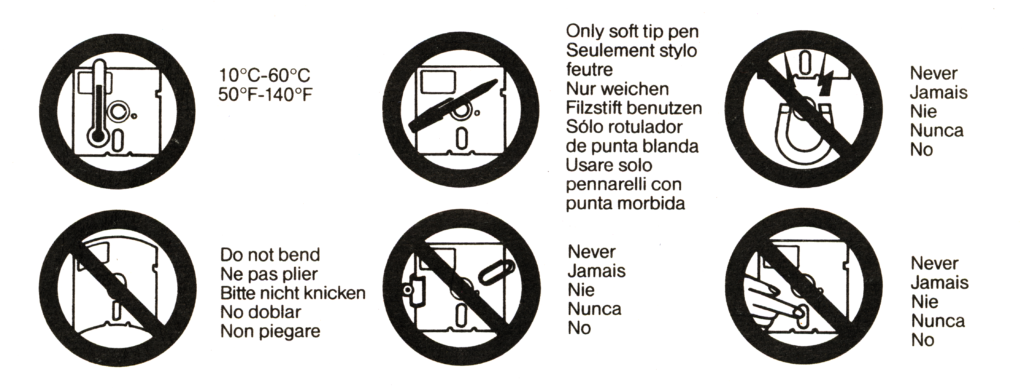
Generally they all follow they same message, Do not bend, only use soft tip pens or markers, never use paper clips, don’t touch the magnetic media with your hands, and most of all, keep magnets away from the disk. Others would indicate to be sure to insert into the drive carefully and not to force them. Many list the proper temperature and humidity to store the disks, which is a very wide range.
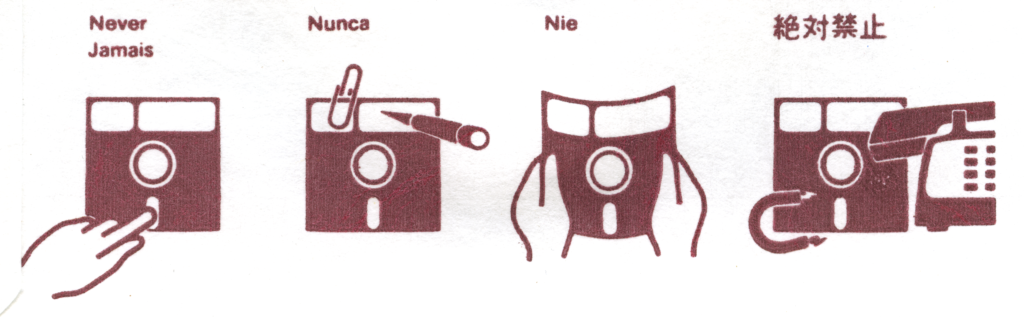
The sources of magnetism are very different from what we might find today in a typical office or home. No longer do we see large heavy telephones which huge magnets inside, or huge CRT monitors, nor do many of us keep large multimedia speakers at our desks, but these were real dangers when floppy disks were in use. For those who use floppy disks today, we have new unknown dangers to contend with, the modern laptop and cell phone which can be deadly to magnetic media. I explore this and other myths in a paper submitted to iPres this fall, stay tuned!
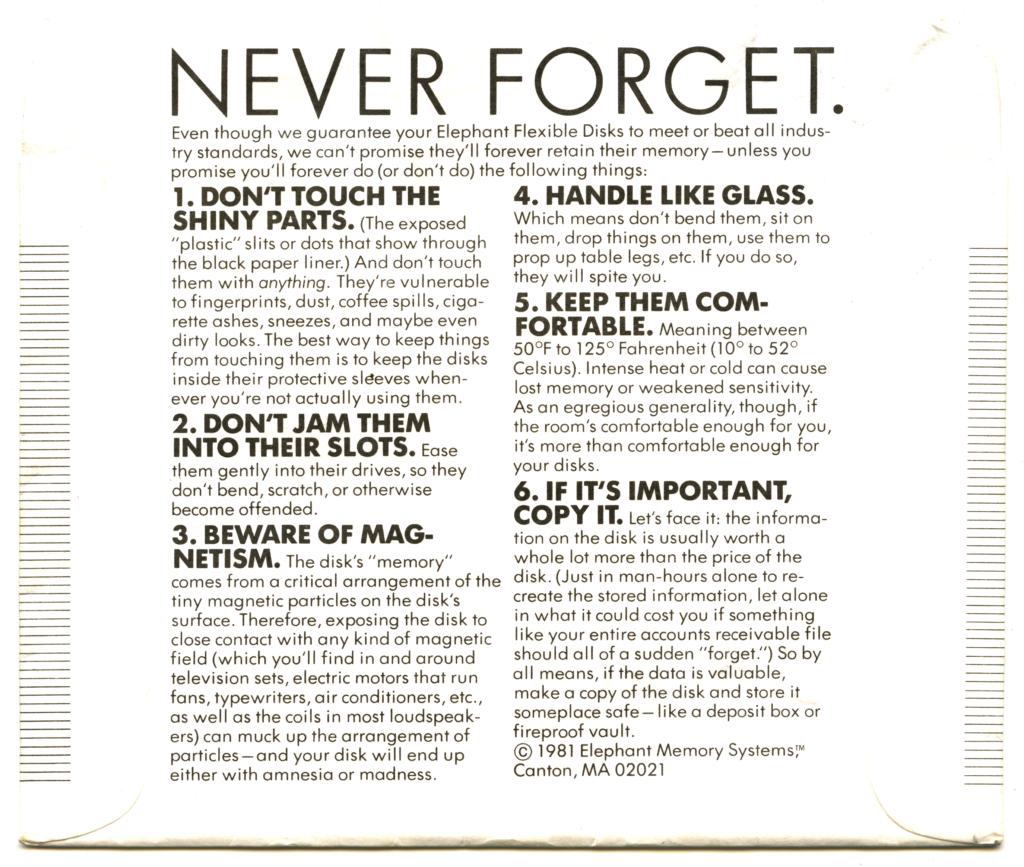
One of my favorite practical back sides is this one from Elephant Memory Systems. Don’t touch the shiny Parts! Also a reminder of making a copy of your data if it’s important, a good preservation principle.
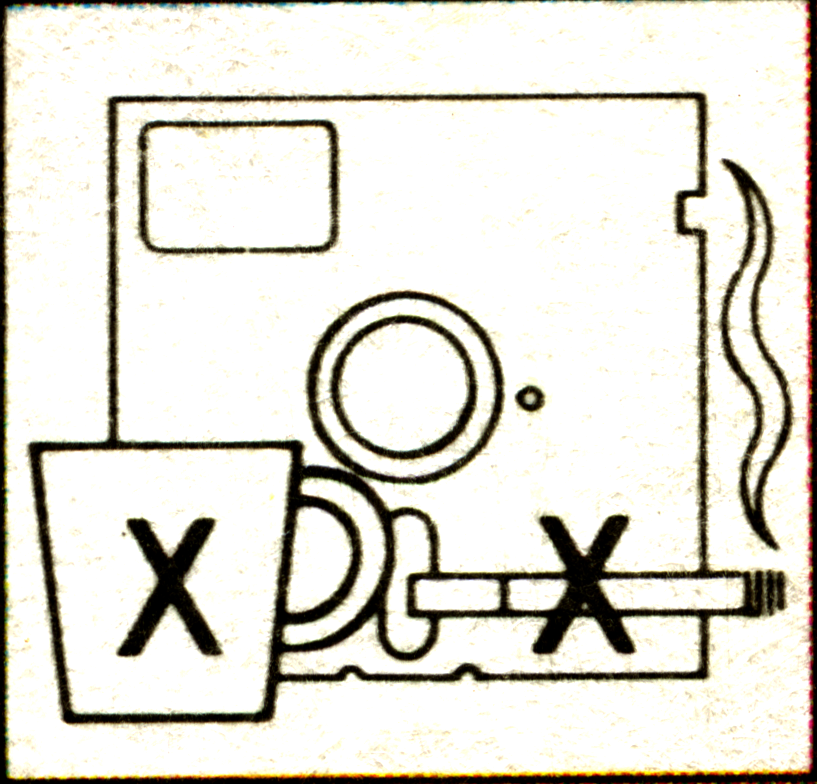
There are some slightly humorous instructions, like not letting your disk drink or smoke.
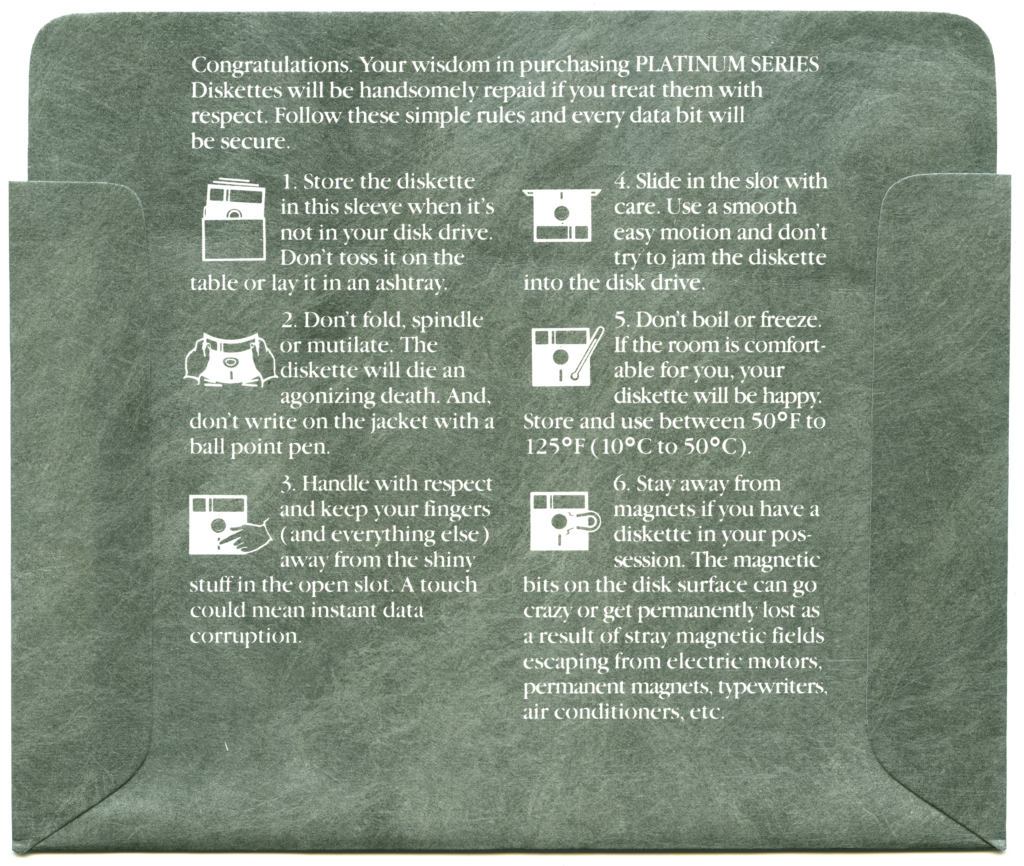
Or this clever set of instructions. Letting us know to avoid letting our disks die an agonizing death and to keep them happy.
But of course the the most famous of all disk care backside instructions go to the Beagle Bros. They decided to go with something less practical and more humorous to get their point across.
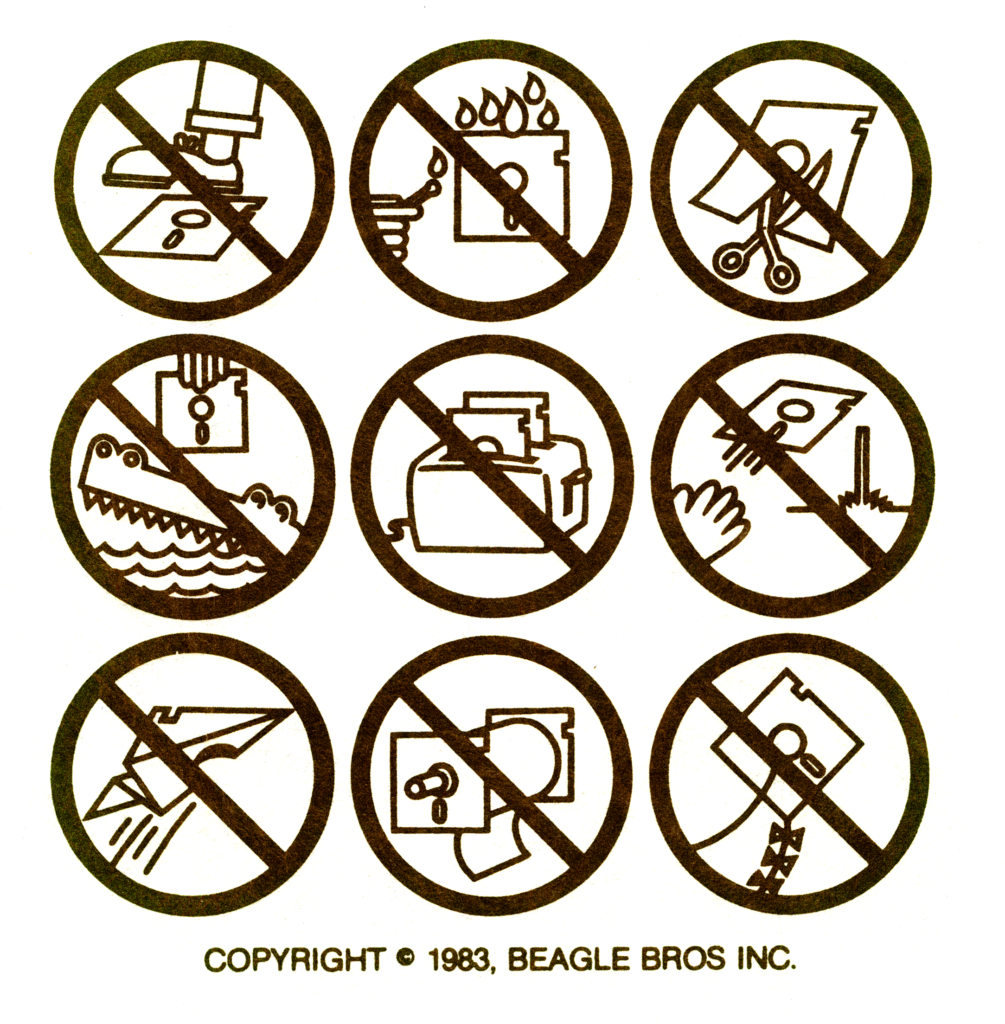
The Beagle Bros were a software company and distributor who mainly distributed Apple II software in the 1980’s. The art is credited to Fred Crone, an artist for the Beagle Bros, who with is wife Sara created much of the art used by the software company. The warnings were so popular, they got asked frequently if the warnings could be reprinted and permission was happily given. You can find more images and history at the Beagles Bros Repository. Which is your favorite?
If you happen to catch me at a conference or send me a nice message below, I might part with a few stickers I have made using many of the icons and warnings you find on the back of these sleeves. Enjoy.
Totally agree, those Tyvek sleeves were a lifesaver for protecting them. It’s amazing how much we relied on such small media back then.