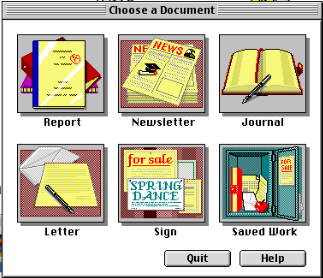
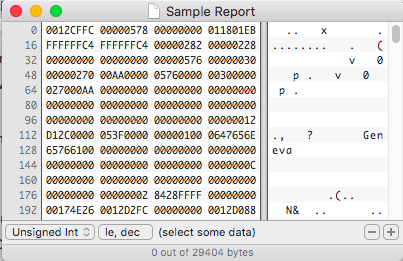
By the title you might think this was a post about racing. But this is a file format blog, so we will keep on that topic. When I was in school many years ago, I remember using desktop publishing tools like PageMaker for the first time. When I got a job working for a local commercial printer in the early 1990’s, I was introduced to QuarkXPress. This became a career and I spent the next decade and a half working in the PrePress field. I got to know tools like Quark and InDesign extremely well. But even before these layout tools became what they are today, there was an early entry into the desktop publishing market.
Ready, Set, Go! was the “Ultimate Page Processor” released in 1985 for the Macintosh by Manhattan Graphics Corp. But had started advertising as early as Summer 1984.
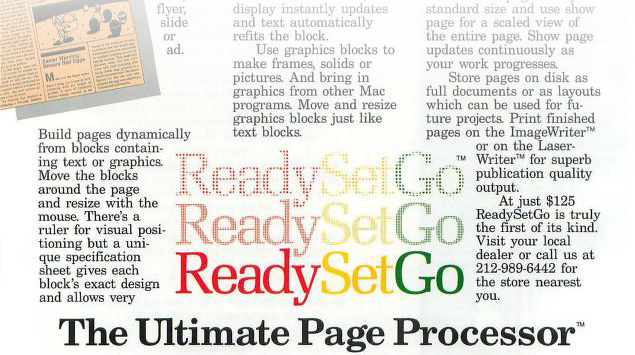
For a few years it was one of the best layout tools on the market and was not very expensive. It continued to add features which rivaled the more expensive tools. Aldus PageMaker also come out shortly after in 1985, but was almost $500 when released. The software was sold to Letraset in 1987 and used it to replace their MacPublisher/LetraPage product and shortly afterwards released version 4.0 of Ready, Set, Go!. Letraset made some improvements and even tried to make a pro version called DesignStudio in 1989. When sales started to stagnate and Tools like Pagemaker and Quark owning most of the market, Letraset gave the software back to Manhattan Graphics in the USA in 1992 who then released a small update combining the two products back together into version 5.0. Then they released version 6.0 later that year. In 1996 the international rights were sold to Diwan, a company who could make use of the very foreign language capabilities of the software.
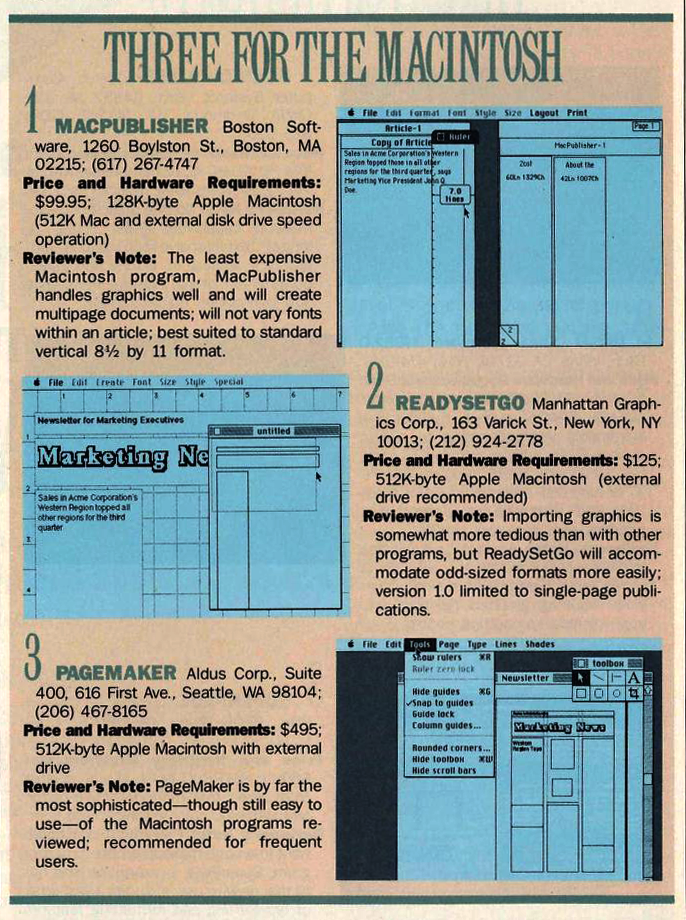
Ready, Set, Go! had a great history of foreign language support, thanks in part to the Apple Quickdraw GX software which helped render other language glyphs and writing directions. There were special versions for languages like Hebrew. A GX version of the software was released in 1996 that supported many other languages.
Because of and in spite of the craziness of the software’s ownership, the file format used with the software changed frequently, but mostly kept the same basic structure. Identification of the different versions will be difficult, but that is why we are here, let’s take a look. Remember, these were all very early Macintosh programs, meaning there is no extension and their identification is based on Type/Creator codes. Luckily, there is no Resource Forks we need to account for in their identification or preservation.
Here is a look at a file from version 1.
 % hexdump -C RSG1-s01 | head
00000000  00 78 00 03 00 00 00 48  00 48 00 00 00 00 02 da  |.x.....H.H......|
00000010  02 28 ff e1 ff e2 02 f9  02 46 03 47 05 28 03 fc  |.(.......F.G.(..|
00000020  00 02 00 00 00 48 00 48  00 00 00 00 02 da 02 28  |.....H.H.......(|
00000030  00 01 00 00 00 64 00 00  00 01 00 01 01 01 00 00  |.....d..........|
00000040  00 01 27 0f 00 01 00 01  00 00 00 00 00 00 00 00  |..'.............|
00000050  00 00 00 00 00 02 00 19  01 90 00 00 00 00 00 40  |...............@|
00000060  00 00 00 00 00 00 00 00  00 01 00 00 00 00 00 00  |................|
00000070  00 00 00 00 00 00 00 00  00 00 00 01 00 01 00 48  |...............H|
00000080  00 48 00 48 00 48 00 01  00 00 00 01 00 00 00 01  |.H.H.H..........|
00000090  00 00 00 01 00 00 00 00  00 00 00 00 00 00 00 00  |................|

% hexdump -C RSG2-s01 | head
00000000  00 78 00 02 00 00 00 48  00 48 00 00 00 00 02 d8  |.x.....H.H......|
00000010  02 28 ff e0 ff e2 02 f8  02 46 03 07 05 28 03 fc  |.(.......F...(..|
00000020  00 02 00 00 00 48 00 48  00 00 00 00 02 d8 02 28  |.....H.H.......(|
00000030  00 01 00 00 00 64 00 00  00 01 00 01 01 01 00 00  |.....d..........|
00000040  00 01 27 0f 00 01 00 01  00 00 00 00 00 00 00 00  |..'.............|
00000050  00 00 00 00 00 02 00 19  01 90 00 00 00 00 00 00  |................|
00000060  00 00 00 00 00 00 00 00  00 00 00 00 00 00 00 00  |................|
00000070  00 00 00 00 00 00 00 00  00 00 00 01 00 13 00 04  |................|
00000080  00 10 00 1c 00 04 00 10  00 10 00 01 00 01 00 00  |................|
00000090  00 03 17 54 00 06 14 9e  00 05 08 ae 00 01 50 ec  |...T..........P.|

% getfileinfo RSG2-s01
file: "RSG2-s01"
type: "RSGI"
creator: "MART"
attributes: avbstclInmedz
created: 04/17/1986 17:31:32
modified: 04/28/1986 10:53:01

% hexdump -C RSG3 | head
00000000  00 1e 00 00 00 86 00 01  b8 2a 00 01 00 03 00 02  |.........*......|
00000010  00 01 b8 12 00 01 b8 1e  00 01 b8 4e 00 00 00 01  |...........N....|
00000020  b8 0a 00 00 80 00 00 00  80 00 00 00 80 00 00 00  |................|
00000030  80 00 00 00 40 00 00 00  40 00 00 04 00 02 00 01  |....@...@.......|
00000040  b8 06 ff fd 52 53 47 33  00 6c 65 64 00 ff ff f0  |....RSG3.led....|
00000050  1f ff ff f0 1f ff ff f0  00 00 00 10 00 00 34 42  |..............4B|
00000060  41 50 50 4c 00 00 00 ff  00 00 00 10 00 00 00 22  |APPL..........."|
00000070  44 52 57 47 00 01 00 ff  00 00 00 10 00 00 00 00  |DRWG............|
00000080  00 10 43 54 00 02 00 01  ff 00 ff ff 00 00 00 78  |..CT...........x|
00000090  00 03 00 00 00 48 00 48  00 00 00 00 02 f0 02 40  |.....H.H.......@|

% hexdump -C RSG4-s01 | head
00000000  01 90 00 00 01 e6 00 00  01 e2 00 00 00 00 00 00  |................|
00000010  00 00 00 00 00 00 00 00  00 00 00 00 00 00 00 00  |................|
*
00000060  00 00 00 00 00 00 00 cc  00 04 5b a0 00 01 00 03  |..........[.....|
00000070  00 02 00 04 5b 68 00 04  5b 70 00 04 5b 7c 00 00  |....[h..[p..[|..|
00000080  00 04 5b 5c 00 00 00 04  5b 64 00 00 80 00 00 00  |..[\....[d......|
00000090  80 00 00 00 80 00 00 00  80 00 00 00 40 00 00 00  |............@...|
000000a0  40 00 00 04 00 02 ff 00  00 04 5b 60 ff fe 08 52  |@.........[`...R|
000000b0  53 47 34 2d 73 30 31 00  00 00 00 00 00 00 00 00  |SG4-s01.........|
000000c0  00 00 00 00 00 00 00 00  00 00 00 00 00 00 00 00  |................|

% getfileinfo RSG4.5
file: "RSG4.5"
type: "RSGR"
creator: "MEMR"
attributes: avbstclInmedz
created: 11/16/2021 13:39:34
modified: 11/16/2021 13:39:34
If you would like to play around with some samples from version 2. You can download them from here:
We can look at the hexadecimal for all the files, but this table will better explain the differences between versions.
| Version | Type | Creator | First two Bytes | Developer | Year |
|---|---|---|---|---|---|
| 1.0.1 | RSGF | MART | 0078 | Manhattan Graphics Corporation | 1985 |
| 2.0 | RSGI | MART | 0078 | Manhattan Graphics Corporation | 1985 |
| 3.0 | RSGJ | MRSN | 001E | Manhattan Graphics Corporation | 1986 |
| 4.0 | RSGK | MRSN | 0190 | Letraset | 1987 |
| 4.5 | RSGR | MEMR | 138B | Letraset | 1988 |
| Design Studio 1.0 | RSGS | MRJN | 13C9 | Letraset | 1989 |
| Design Studio 2.0 | DSTD | MRJN | 13E4 | Letraset | 1991 |
| 6.0.2 | MG6F | MROS | 1770 | Manhattan Graphics | 1993 |
| 7.0.5 Intl | MG7F | MRDN | 1B61 | Diwan | 1996 |
| 7.2.8 | MG6F | MROS | 1BBC | Diwan | 2002 |
| 7.7.8 | MG6F | MROS | 1BBC | Diwan | 2011 |
This table is what I know currently, there is probably many more I can add as I locate samples, such as Version 5.0 and 5.1.
It amazes me how often the Creator code changes, usually this is fairly stable, but since it did change hands a lot, it makes a little sense. The Type code can often indicate changes in file format, so we can see version 1 & 2 are probably compatible, and later versions 6 & 7, but there own read me files helps us understand the compatibility. Version 2 added multiple page support, so it might have more differences.
Ready,Set,Go! 6.0 can open files created with Ready,Set,Go! 4.5, 4.5a, 5.0, and 5.1, and DesignStudio 1.0, 1.01 and 2.0. It cannot open files created with versions 1, 2, 3 or 4 of Ready,Set,Go! Registered users can obtain a special version of RSG 4.5 to open files created with earlier versions of Ready,Set,Go! to convert them to Version 6.0.
Ready,Set,Go! will open an old RSG document down to version 4 and a DesignStudio document down to version 1.0. Ready,Set,Go! 7.1 will automatically save it with the name ‘Copy of (filename)’ in order not to overwrite the old document. Whereas Ready,Set,Go! 7.2 or later can save documents that are compatible with Ready,Set,Go! versions 6 and 7.0.
So it seems you need version 4.5 to open earlier files and version 6 to open versions 4.5 to 5.1, then in 7.2 a change happened separating versions 6-7.1 and 7.2 and greater. Sounds like we will need at least 4 signatures to identify all the major changes.
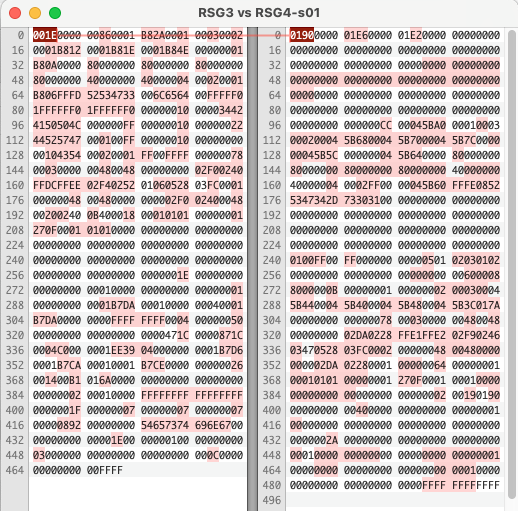
Here is the problem, the main differences between the versions is the first two bytes. This is not enough to make a strong signature in PRONOM. Let look at some options.
% hexdump -C RSG4-s01 | tail
00000160  00 00 02 da 02 28 00 01  00 00 00 64 00 00 00 01  |.....(.....d....|
00000170  00 01 01 01 00 00 00 01  27 0f 00 01 00 01 00 00  |........'.......|
00000180  00 00 00 00 00 00 00 00  00 00 00 02 00 19 01 90  |................|
00000190  00 00 00 00 00 40 00 00  00 00 00 00 00 00 00 01  |.....@..........|
000001a0  00 00 00 00 00 00 00 00  00 00 00 00 00 00 00 00  |................|
000001b0  00 00 00 2a 00 00 00 00  00 00 00 00 00 00 00 00  |...*............|
000001c0  00 01 00 00 00 00 00 00  00 00 00 00 00 00 00 01  |................|
000001d0  00 00 00 00 00 00 00 00  00 00 00 00 00 01 00 00  |................|
000001e0  00 00 00 00 00 00 00 00  00 00 ff ff ff ff ff ff  |................|
Many since version 3 end with at least two bytes of the values FF FF, but that is also pretty common.
% hexdump -C RSG4.5 | head
00000000  13 8b 00 00 04 10 00 00  04 0c 00 00 04 14 00 00  |................|
00000010  04 18 00 00 04 1c 00 00  00 00 00 00 00 00 00 00  |................|
00000020  00 00 00 00 00 00 00 00  00 00 00 00 00 00 00 00  |................|
*
00000060  00 00 00 00 00 00 01 88  17 62 e1 d4 00 01 00 03  |.........b......|
00000070  00 02 17 62 e1 d0 17 62  e1 dc 17 62 e1 e8 00 00  |...b...b...b....|
00000080  17 62 e1 cc 00 00 17 62  e1 c8 00 00 80 00 00 00  |.b.....b........|
00000090  80 00 00 00 80 00 00 00  80 00 00 00 40 00 00 00  |............@...|
000000a0  40 00 00 04 00 02 ff 00  17 62 e1 50 ff fd 06 52  |@........b.P...R|
000000b0  53 47 34 2e 35 65 64 00  00 00 00 00 00 00 00 00  |SG4.5ed.........|
The header generally contains two bytes, then 00 00, then repeats for a few bytes, but adding 00 00 to a signature is also not very robust. Comparing version 3 to version 4 file doesn’t show much in common except for zeros. It may not be possible to combine signatures, they may need individual signatures for each version.
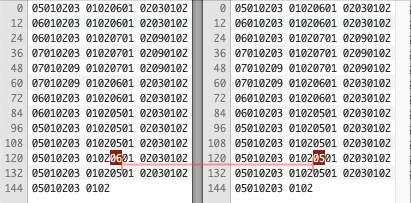
But the versions after 6, have an interesting segment of bytes. “050102030102060102030102060102030102060102030102060102030102070102090102070102030102070102090102070102090102070102090102070102090102060102030102060102030102060102030102060102030102050102030102050102030102050102030102050102030102050102030102050102030102060102030102050102030102050102030102050102030102”
% hexdump -C /Users/thorsted/Downloads/ReadySetGo\ \(1\)/RSG6
00000000  17 70 00 00 34 70 00 00  34 6c 00 00 34 74 00 00  |.p..4p..4l..4t..|
00000010  34 78 00 00 34 90 00 00  34 a4 00 00 38 fe 00 00  |4x..4...4...8...|
00000020  39 20 00 00 39 68 00 00  3b 40 00 00 3b 44 00 00  |9 ..9h..;@..;D..|
00000030  3b 44 00 00 00 00 00 00  00 00 00 00 00 00 00 00  |;D..............|
00000040  00 00 00 00 00 00 00 00  00 00 00 00 00 00 00 00  |................|
*
000001c0  00 03 01 01 00 ff 00 00  00 00 05 01 02 03 01 02  |................|
000001d0  06 01 02 03 01 02 06 01  02 03 01 02 06 01 02 03  |................|
000001e0  01 02 06 01 02 03 01 02  07 01 02 09 01 02 07 01  |................|
000001f0  02 03 01 02 07 01 02 09  01 02 07 01 02 09 01 02  |................|
00000200  07 01 02 09 01 02 07 01  02 09 01 02 06 01 02 03  |................|
00000210  01 02 06 01 02 03 01 02  06 01 02 03 01 02 06 01  |................|
00000220  02 03 01 02 05 01 02 03  01 02 05 01 02 03 01 02  |................|
00000230  05 01 02 03 01 02 05 01  02 03 01 02 05 01 02 03  |................|
00000240  01 02 05 01 02 03 01 02  06 01 02 03 01 02 05 01  |................|
00000250  02 03 01 02 05 01 02 03  01 02 05 01 02 03 01 02  |................|
00000260  00 09 20 60 00 08 80 00  00 0b 00 00 00 01 00 00  |.. `............|
00000270  00 02 00 00 00 00 00 00  00 00 00 00 00 00 00 00  |................|
00000280  00 00 00 00 00 ea 04 b0  00 64 03 e8 00 00 00 00  |.........d......|
00000290  17 97 50 6c 00 00 00 00  00 3c 00 3d 00 3e 00 3f  |..Pl.....<.=.>.?|
000002a0  00 40 00 41 00 42 00 43  00 64 00 05 00 00 00 00  |.@.A.B.C.d......|
000002b0  00 00 00 00 00 00 00 00  00 00 00 00 00 00 00 00  |................|
It is in all the samples I have for version 6+, most have the same 150 bytes, all starting around the 458th byte (0x1CA). I have no idea what it means, but it makes up for the weak bytes available in the older versions. If anyone out there knows the significance in this byte sequence, I would like to understand. Visually it looks the most interesting in a 3 column view, and some files do have one byte difference.
Ok, so for now, it looks like the best option is to group the signatures into Version 3-4, Version 6-7, and DesignStudio 1-2. I will look at what is best for Version 1-2 of ReadySetGo in the future. For now, you can see my samples and suggested signature on my GitHub page.