MORE

The main subject of these posts is about Obsolete software and file formats. I prefer to focus on older software titles and collect them when I can. I have also found older Macintosh software to be particularly interesting as many of the qualities of early Macintosh use is lost today. In researching a very early Macintosh title, I came across an article from 1999 written by the Washington Post, the article, now 26 years old, was already commenting about “antique” software which was less than 20 years old at the time. Is there a term for even more antique? The title of the article? “Old Enthusiasts Are Scouring the Web to Find ‘Antique’ Software”. I feel this hasn’t changed, I still scour the web to find old software, and if the enthusiasts were “old” 26 years ago, then I am ancient.

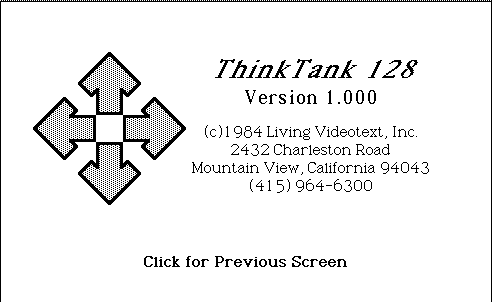
Back in 1983, a little company called Living Videotext run by Dave Winer, who had developed a couple products for the Apple II, saw an opportunity to bring their product to the Macintosh. Their product, ThinkTank, was the fourth title to ship for the new Macintosh released in 1984.

Thinktank was an “idea processor“, not a word processor, but “a tool for organizing your thoughts on a computer screen. You could create an outline, then indent, move an item up a list, or out a level. Flesh out the details, and quickly record a top-level idea you had overlooked.” It was the beginning of outliner tools created by the company.

% hexdump -C Sample | head
00000000 2e 48 45 41 44 20 30 20 2b 20 20 4d 61 6a 6f 72 |.HEAD 0 + Major|
00000010 20 4c 65 61 67 75 65 20 42 61 73 65 62 61 6c 6c | League Baseball|
00000020 20 54 65 61 6d 73 0d 2e 48 45 41 44 20 31 20 2b | Teams..HEAD 1 +|
00000030 20 20 4c 65 61 67 75 65 73 20 61 6e 64 20 44 69 | Leagues and Di|
00000040 76 69 73 69 6f 6e 73 0d 2e 48 45 41 44 20 32 20 |visions..HEAD 2 |
00000050 2b 20 20 41 6d 65 72 69 63 61 6e 20 4c 65 61 67 |+ American Leag|
00000060 75 65 0d 2e 48 45 41 44 20 33 20 2b 20 20 57 65 |ue..HEAD 3 + We|
00000070 73 74 65 72 6e 20 44 69 76 69 73 69 6f 6e 0d 2e |stern Division..|
00000080 48 45 41 44 20 34 20 2d 20 20 43 61 6c 69 66 6f |HEAD 4 - Califo|
00000090 72 6e 69 61 20 41 6e 67 65 6c 73 0d 2e 48 45 41 |rnia Angels..HEA|

The files created by ThinkTank are plain text with the ASCII “HEAD”. There was also a DOS version of ThinkTank, but the files used were .DB and .SAV, although the templates in the .TXT format did use this same format.

% hexdump -C SAMPLE.TXT | head
00000000 2e 48 45 41 44 20 30 20 2b 20 20 50 65 72 66 6f |.HEAD 0 + Perfo|
00000010 72 6d 61 6e 63 65 20 52 65 76 69 65 77 0d 0a 2e |rmance Review...|
00000020 48 45 41 44 20 31 20 2d 20 20 4e 61 6d 65 3a 20 |HEAD 1 - Name: |
00000030 0d 0a 2e 48 45 41 44 20 31 20 2d 20 20 4a 6f 62 |...HEAD 1 - Job|
00000040 20 54 69 74 6c 65 3a 20 0d 0a 2e 48 45 41 44 20 | Title: ...HEAD |
00000050 31 20 2d 20 20 52 65 76 69 65 77 20 44 61 74 65 |1 - Review Date|
00000060 3a 20 0d 0a 2e 48 45 41 44 20 31 20 2d 20 20 52 |: ...HEAD 1 - R|
00000070 65 76 69 65 77 20 70 65 72 69 6f 64 20 66 6f 72 |eview period for|
00000080 3a 20 0d 0a 2e 48 45 41 44 20 31 20 2b 20 20 4f |: ...HEAD 1 + O|
00000090 62 6a 65 63 74 69 76 65 73 20 4d 65 74 2f 4e 6f |bjectives Met/No|

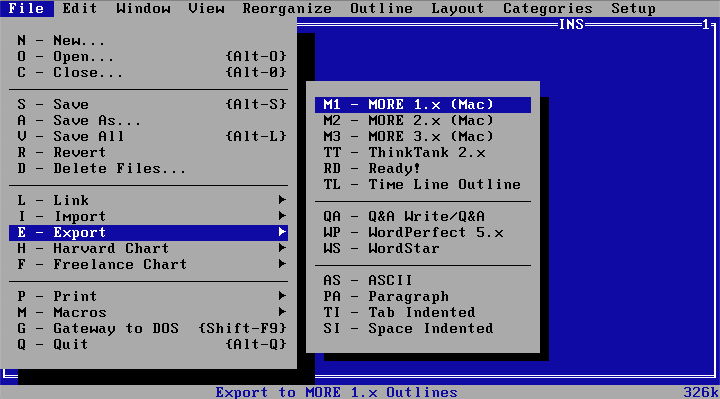
Turns out this was a special format they called “dot-head“, aptly named for the head of the file. It was used as an interchange format to move outlines between ThinkTank, another program called Ready!, and the later product MORE.

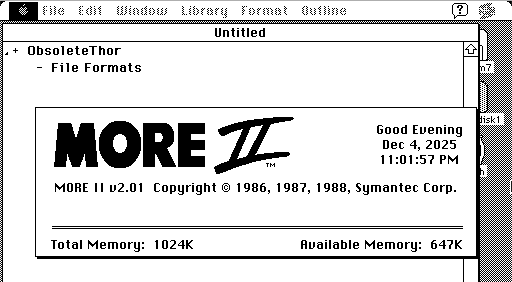
MORE was developed to be multiple tools in one. Meant to “Unite idea processing technology with the desktop publishing revolution“. MORE replaced ThinkTank in 1986 and promised more flexibility by creating charts and presentations quickly from your outline. MORE used the same dot-head format initially, also the ASCII could be in lowercase.

% hexdump -C MORE1 | head
00000000 2e 68 65 61 64 20 30 20 2b 20 20 48 6f 6d 65 0d |.head 0 + Home.|
00000010 2e 68 65 61 64 20 31 20 2d 20 20 0d 2e 68 65 61 |.head 1 - ..hea|
00000020 64 20 31 20 2d 20 20 54 65 73 74 69 6e 67 0d 2e |d 1 - Testing..|
00000030 68 65 61 64 20 31 20 2d 20 20 0d |head 1 - .|

In 1987 Living Videotext was purchased by Symantec. Shortly after Symantec released MORE II and a rebranded DOS application called GrandView based on ThinkTank.

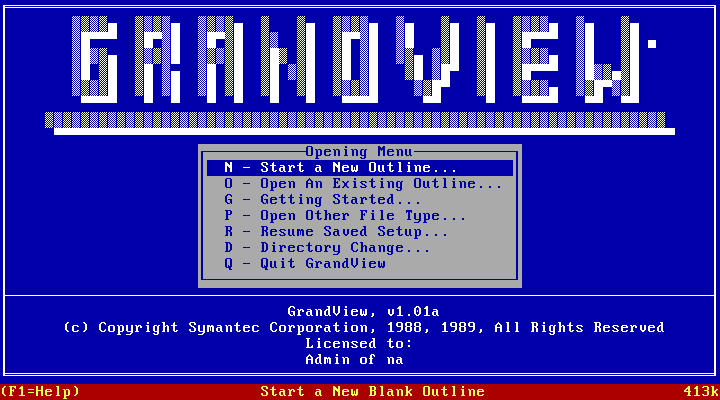
Let’s take a look at GrandView, it was built from the DOS version of ThinkTank and compatible with the same formats. It had great reviews at the time and provided the first outliner for Symantec. It was written by the developer, John Friend, who created PC Outline which was often bundled with WordStar.

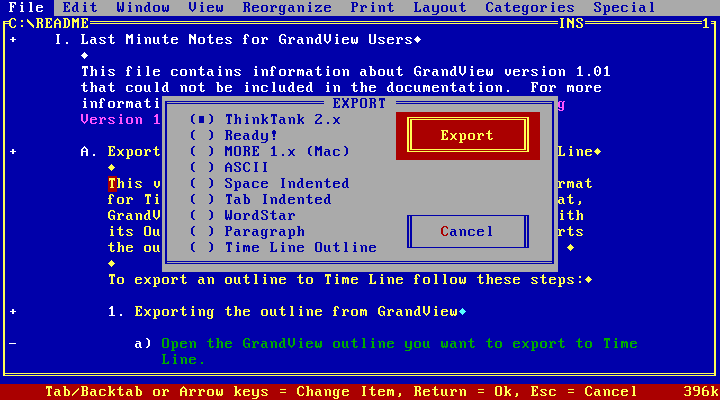
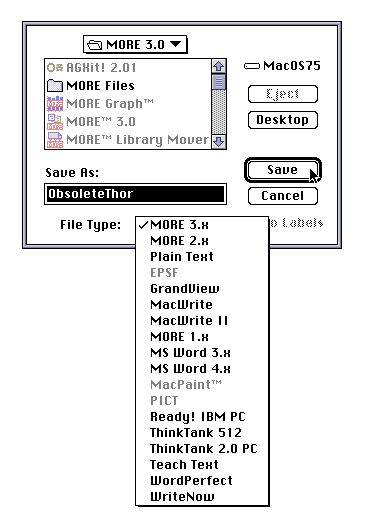
GrandView could import and export into any of the other products.

GrandView version 1 went with a new file format.

% hexdump -C PROJECT.GV | head
00000000 0b 00 01 00 1a 4a 4c 46 5f 49 44 06 00 02 00 01 |.....JLF_ID.....|
00000010 01 0a 00 03 00 16 00 26 00 2c 00 05 00 05 00 78 |.......&.,.....x|
00000020 06 00 07 00 ff ff 06 00 1a 00 01 00 26 00 08 00 |............&...|
00000030 26 00 ee 4d 02 00 00 00 c0 a8 00 00 00 00 00 00 |&..M............|
00000040 01 00 00 00 00 00 01 00 00 00 00 00 00 00 00 01 |................|
00000050 00 00 22 00 0a 00 20 1c 00 00 20 1c 00 00 d0 b6 |.."... ... .....|
00000060 00 00 10 ef 00 00 20 1c 00 00 20 1c 00 00 60 35 |...... ... ...`5|
00000070 01 00 01 00 05 00 10 00 62 15 00 13 00 cc 93 88 |........b.......|
00000080 10 54 54 59 2e 50 44 56 00 00 00 00 00 00 2c 00 |.TTY.PDV......,.|
00000090 1c 00 00 00 00 00 00 00 00 00 00 00 00 00 00 00 |................|

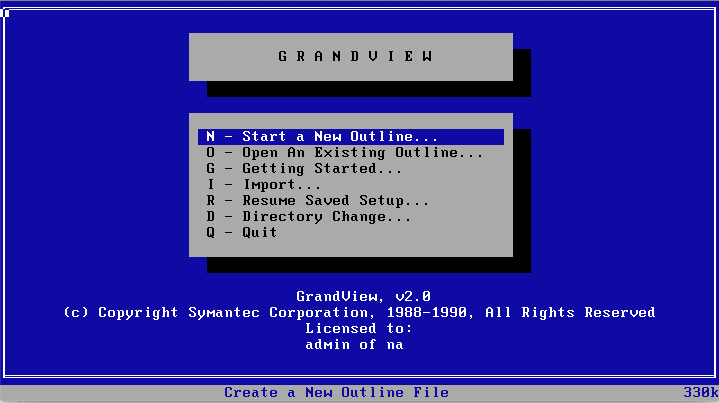
GrandView 2.0 also used the same format.

% hexdump -C TEST.GV | head
00000000 0b 00 01 00 1a 4a 4c 46 5f 49 44 06 00 02 00 01 |.....JLF_ID.....|
00000010 02 0a 00 03 00 02 00 2b 00 3a 00 05 00 05 00 78 |.......+.:.....x|
00000020 06 00 07 00 ff ff 26 00 08 00 2b 00 d5 3e 02 00 |......&...+..>..|
00000030 00 00 d0 b6 00 00 00 00 00 00 01 00 00 00 00 00 |................|
00000040 01 00 00 00 00 00 00 00 00 01 00 00 22 00 0a 00 |............"...|
00000050 20 1c 00 00 20 1c 00 00 d0 b6 00 00 10 ef 00 00 | ... ...........|
00000060 20 1c 00 00 20 1c 00 00 60 35 01 00 01 00 05 00 | ... ...`5......|
00000070 10 00 60 15 00 13 00 9b 5d 83 14 48 50 4c 33 2e |..`.....]..HPL3.|
00000080 50 44 56 00 00 00 00 00 2c 00 1c 00 00 00 00 00 |PDV.....,.......|
00000090 00 00 00 00 00 00 00 00 00 00 00 00 00 00 00 00 |................|

GrandView was also compatible with the Macintosh counterpart, MORE.

Symantec then released a new version of the MORE software for the Macintosh in 1988, adding new presentation features. MORE II went away from the dot-head format and used a new proprietary format.

% hexdump -C MORE2-s01 | head
00000000 00 03 4d 52 49 49 00 80 00 00 00 80 00 00 00 78 |..MRII.........x|
00000010 00 00 00 00 00 00 00 00 00 00 00 f8 00 00 00 a8 |................|
00000020 00 00 01 a0 00 00 00 28 00 00 01 c8 00 00 00 18 |.......(........|
00000030 00 00 01 e0 00 00 00 00 00 00 01 e0 00 00 00 0c |................|
00000040 00 00 01 ec 00 00 00 0c 00 00 01 e0 00 00 00 00 |................|
00000050 00 00 00 00 00 00 00 00 00 00 00 00 00 00 00 00 |................|
*
00000080 00 03 00 00 00 48 00 48 00 00 00 00 02 d8 02 28 |.....H.H.......(|
00000090 ff e1 ff e2 02 f9 02 46 03 47 05 28 03 fc 00 02 |.......F.G.(....|
000000a0 00 00 00 48 00 48 00 00 00 00 02 d8 02 28 00 01 |...H.H.......(..|

Then in 1990 Symantec released MORE 3.0 with even more features and improvements to the user experience. Also adding a companion tool, MORE Graph.

% hexdump -C MORE3-s01 | head
00000000 00 06 4d 4f 52 33 00 80 00 00 00 80 00 00 00 78 |..MOR3.........x|
00000010 00 00 00 f8 00 00 01 b4 00 00 02 ac 00 00 00 a8 |................|
00000020 00 00 11 16 00 00 00 32 00 00 11 48 00 00 00 20 |.......2...H... |
00000030 00 00 11 68 00 00 00 00 00 00 11 68 00 00 00 10 |...h.......h....|
00000040 00 00 11 83 00 00 00 0c 00 00 11 68 00 00 00 00 |...........h....|
00000050 00 00 00 00 00 00 03 54 00 00 0d c2 00 00 11 78 |.......T.......x|
00000060 00 00 00 0b 00 00 00 00 00 00 00 00 00 00 00 00 |................|
00000070 00 00 00 00 00 00 00 00 00 00 00 00 00 00 00 00 |................|
00000080 00 03 00 00 00 48 00 48 00 00 00 00 02 d8 02 28 |.....H.H.......(|
00000090 ff e1 ff e2 02 f9 02 46 03 47 05 28 03 fc 00 02 |.......F.G.(....|

The MORE 3 format got a new header but appears similar in structure to the previous version. And the new companion tool MORE Graph had yet another format.

% hexdump -C MORE3-graph | head 
00000000 00 01 00 00 01 09 00 00 00 0c 00 01 09 19 80 00 |................|
00000010 01 09 54 65 73 74 00 00 00 07 00 01 00 03 00 00 |..Test..........|
00000020 00 0b 00 00 00 00 00 00 00 00 00 00 00 00 00 00 |................|
00000030 00 00 00 00 00 00 00 00 00 00 00 00 00 00 00 00 |................|
*
00000610 00 00 00 00 00 00 00 01 06 47 65 6e 65 76 61 00 |.........Geneva.|
00000620 00 00 00 00 00 00 00 00 00 00 00 00 00 00 00 00 |................|
*
00000670 01 00 00 1f ca 33 a0 00 2b 00 04 02 d8 03 d8 09 |.....3..+.......|
00000680 57 6f 72 6b 73 68 65 65 74 00 00 00 00 00 00 00 |Worksheet.......|

Luckily these early Macintosh based formats didn’t use a resource fork, making them fully compatible with their PC counterpart.

One of the coolest parts of this long list of outline software, is that years later, after Symantec discontinued the product, the original creator, Dave Winer, petitioned Symantec to allow him to release the antique software free and clear to the public. How cool is that? I would really like to see this happen more as other software titles die and get swept under the rug leaving the community to try and find copies, preserve them and make sense of the formats. Not only were the early versions made available, a tool was built to migrate the MORE format to more open XML, allowing the ideas trapped in these ancient formats to be re-imagined.

MORE 3.1 was the final version of the software to be released by Symantec. The files produced by MORE 3.1 have an identical header to the standard 3.0 version. Probably only need one signature for the two versions.

% hexdump -C MORE31-s01 | head 
00000000 00 06 4d 4f 52 33 00 80 00 00 00 80 00 00 00 78 |..MOR3.........x|
00000010 00 00 00 f8 00 00 01 b4 00 00 02 ac 00 00 00 a8 |................|
00000020 00 00 11 16 00 00 00 32 00 00 11 48 00 00 00 20 |.......2...H... |
00000030 00 00 11 68 00 00 00 00 00 00 11 68 00 00 00 10 |...h.......h....|
00000040 00 00 11 83 00 00 00 0c 00 00 11 68 00 00 00 00 |...........h....|
00000050 00 00 00 00 00 00 03 54 00 00 0d c2 00 00 11 78 |.......T.......x|
00000060 00 00 00 0b 00 00 00 00 00 00 00 00 00 00 00 00 |................|
00000070 00 00 00 00 00 00 00 00 00 00 00 00 00 00 00 00 |................|
00000080 00 03 00 00 00 48 00 48 00 00 00 00 02 d8 02 28 |.....H.H.......(|
00000090 ff e1 ff e2 02 f9 02 46 03 47 05 28 03 fc 00 02 |.......F.G.(....|

If you would like to try out the MORE software, download this disk image, and drag onto the Macintosh emulator below. The image will automatically mount and you should be able to take MORE 3.1 for a spin!

Outlining software still has a good place in idea generation and presentation. OmniOutliner can probably trace its roots to these “Antique” titles! Stay tuned for some PRONOM signatures to go along with these many format examples. For now you can gather some of the samples from my Github page.

Textor

Many of us lived through the Word Processing Wars of the late 1980’s and early 1990’s. It was an overwhelming time of many options to choose from, each providing new features with each update, trying to become the leader in the word processing game. Early DOS versions had steep learning curves which built loyalty to those who committed to muscle memory all the key commands needed to produce the perfect document. With the many options to choose for word processing, brought just as many file formats to save your work. Many titles used the same file extensions or encouraged users to choose their own, using their initials instead. Often the files created by these software titles, used standard ASCII text, but mixed in their own formatting codes which all tend to make identification in preservation difficult.

I recently acquired a large lot of older software. It has been fun sorting through it and learning about the different titles. One title stuck out, as I hadn’t heard of it before. I found an old article which included the software in a comparison of word processing software in 1993. The article compares the following executive word processing software.

  • LotusWrite 2.0
  • JustWrite 2.0
  • Professional Write Plus 1.0
  • CA-Textor 6.0
  • Ami Pro 3.0
  • Word for Windows 2.0a
  • WordPerfect 5.1

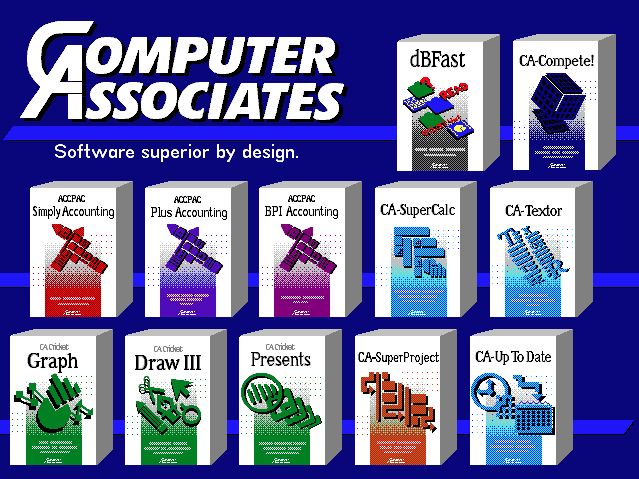
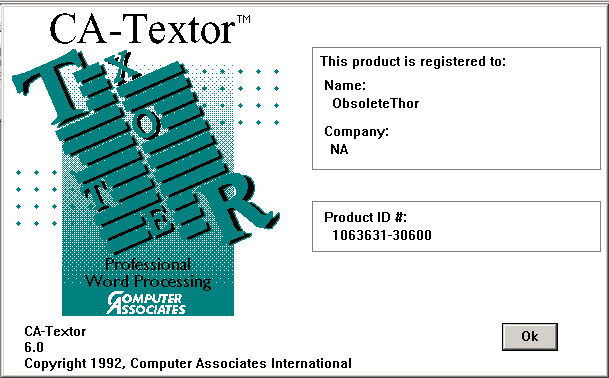
You are probably familiar with a few of these titles, but the one that stuck out to me was CA-Textor 6.0. In my lot of software I came across a two disk installer for CA-Textor 6.0 for Windows. Developed by Computer Associates International, Inc. who opened their doors in 1976 and developed or acquired many software titles.

In the case of CA-Textor, it was purchased from a French company, Talor à Paris, who had been producing Textor, a popular word processor in France, for DOS since the 1983. The original developer, Thierry Lorthiois, had high hopes for a French product to exist in a world of giant American companies. Even with over 70,000 copies sold, the release of Textor 4 in 1988 saw much marketshare lost to Microsoft Word. By 1989, Computer Associates purchased Textor and rebranded Textor 5 for DOS and added mouse compatibility, then in late 1991 released a Windows version of Textor and named it CA-Textor; in line with their other products. It would be the only version released by Computer Associates and disappeared into the void like many word processors of the time.

CA-Textor 6.0 for Windows appears to be a well designed word process for its time. The reviews were mixed, but scored decently in many comparisons. In the article mentioned above, it scored the lowest of all the word processors. The final result says:

CA-Textor fails to offer the usability shortcuts of the other programs, and scores well below the other programs in editing, formatting and graphics manipulation.

It was possibly reviews like this which caused Computer Associates to never update or release a new version of the software.

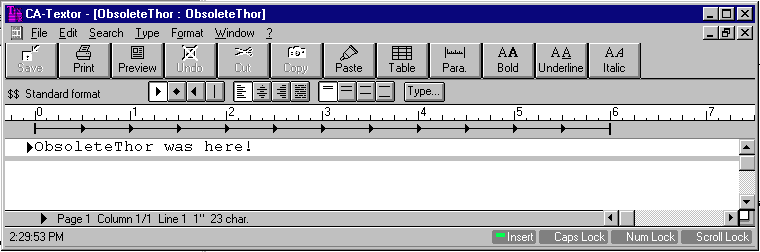
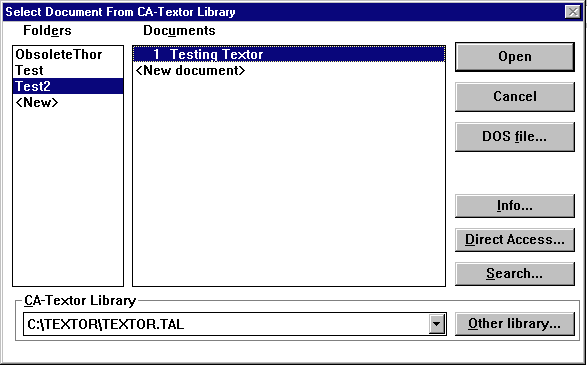
The first thing I noticed with the software was the way the software handles files. The software defaults to a new “Library” method which stores each file connected to a Library which stores a folder of files and their full names and descriptions.

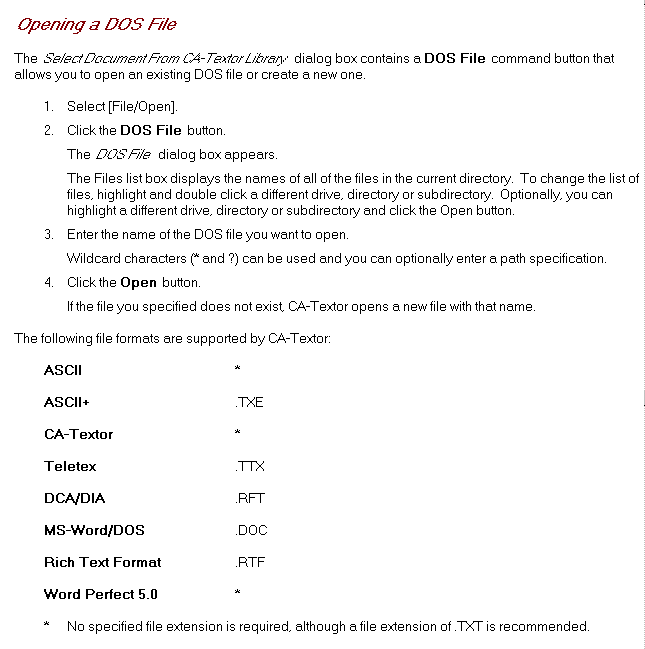
Single files can still be saved from CA-Textor by choosing DOS file, but the extension used is not clear.

Using .TXT for a formatted file seems like a bad recommendation. So let’s take a look at a few of the files generated by by CA-Textor.

The new Library File has the extension .TAL.

 % hexdump -C TEXTOR.TAL | head
00000000 43 3a 5c 54 45 58 54 4f 52 5c 54 45 58 54 4f 52 |C:\TEXTOR\TEXTOR|
00000010 2e 54 41 4c 00 00 00 00 00 00 00 00 00 00 00 00 |.TAL............|
00000020 00 00 00 00 00 00 00 00 00 54 45 58 54 4f 52 00 |.........TEXTOR.|
00000030 00 00 c1 46 8d ec 1a 47 8d ec c1 46 8d ec 05 00 |...F...G...F....|
00000040 01 00 01 00 00 00 00 00 00 00 00 00 00 ff ff 54 |...............T|
00000050 42 58 54 66 00 0a 00 00 00 00 00 65 00 00 00 00 |BXTf.......e....|
00000060 00 00 00 00 00 54 65 73 74 00 00 00 00 00 00 00 |.....Test.......|
00000070 00 00 00 00 00 00 00 00 00 00 00 00 00 00 00 00 |................|
00000080 00 00 00 00 00 00 00 00 00 00 00 00 00 00 54 45 |..............TE|
00000090 58 54 4f 52 00 00 00 e9 46 8d ec e9 46 8d ec 01 |XTOR....F...F...|

The first few bytes is the path of the file.

It also seems the individual files connected to the Library also have the .TAL extension. But they have a different header.

% hexdump -C OBSO0006.TAL | head
00000000 01 14 00 45 54 01 02 58 54 00 06 49 57 01 00 00 |...ET..XT..IW...|
00000010 00 00 00 65 00 87 16 06 80 00 4f 62 73 6f 6c 65 |...e......Obsole|
00000020 74 65 54 68 6f 72 00 00 00 00 00 00 00 00 00 00 |teThor..........|
00000030 00 00 00 00 00 00 00 00 00 00 00 00 00 00 00 00 |................|
00000040 00 00 00 4f 62 73 6f 6c 65 74 65 54 68 6f 72 00 |...ObsoleteThor.|
00000050 00 00 00 00 00 00 00 00 00 00 00 00 00 00 00 00 |................|
00000060 00 00 00 00 00 00 00 00 00 00 00 00 54 45 58 54 |............TEXT|
00000070 4f 52 00 00 00 f4 b0 8e ec 1d b1 8e ec 00 00 00 |OR..............|
00000080 00 00 00 00 00 00 00 00 00 00 00 00 00 00 00 00 |................|
00000090 00 00 00 00 00 00 00 00 00 00 07 11 00 02 00 00 |................|

The CA-Textor software installed some sample files during installation we can also look at.

% hexdump -C SAMPLE01.SAM | head
00000000 01 14 00 45 54 01 02 58 54 00 06 49 57 3b 00 00 |...ET..XT..IW;..|
00000010 00 da 05 00 00 04 01 06 80 00 44 3a 5c 44 4f 43 |..........D:\DOC|
00000020 54 5c 53 41 4d 50 4c 45 30 31 2e 53 41 4d 00 00 |T\SAMPLE01.SAM..|
00000030 00 00 00 00 00 00 00 00 00 00 00 00 00 00 00 00 |................|
00000040 00 00 00 44 4f 53 00 00 00 00 00 00 00 00 00 00 |...DOS..........|
00000050 00 00 00 00 00 00 00 00 00 00 00 00 00 00 00 00 |................|
00000060 00 00 00 00 00 00 00 00 00 00 00 00 43 72 61 69 |............Crai|
00000070 67 00 00 00 00 34 24 b5 29 a1 8a b5 29 00 00 00 |g....4$.)...)...|
00000080 00 00 00 00 00 00 00 00 00 00 00 00 00 00 00 00 |................|
00000090 00 00 00 00 00 00 00 00 00 00 07 61 00 02 00 00 |...........a....|

A later build of CA-Textor had more sample files, but this time with a different extension. Also has the same bytes at the beginning of the file.

% hexdump -C TEMP0005.TEM | head
00000000 01 14 00 45 54 01 02 58 54 00 06 49 57 22 00 00 |...ET..XT..IW"..|
00000010 00 e0 40 12 00 10 00 06 80 00 46 61 78 20 43 6f |..@.......Fax Co|
00000020 76 65 72 20 31 00 00 00 00 00 00 00 00 00 00 00 |ver 1...........|
00000030 00 00 00 00 00 00 00 00 00 00 00 00 00 00 00 00 |................|
00000040 00 00 00 54 65 6d 70 6c 61 74 65 73 00 00 00 00 |...Templates....|
00000050 00 00 00 00 00 00 00 00 00 00 00 00 00 00 00 00 |................|
00000060 00 00 00 00 00 00 00 00 00 00 00 00 54 45 58 54 |............TEXT|
00000070 4f 52 00 00 00 12 04 d7 2b 5d 80 e1 2b 00 00 00 |OR......+]..+...|
00000080 00 00 00 00 00 00 00 00 00 00 00 00 00 00 00 00 |................|
00000090 00 00 00 00 00 00 00 00 00 00 10 3d 02 01 00 00 |...........=....|

The good news is there is a pattern emerging, but not the same extension. I get the feeling they didn’t see much value in the extension for this software. When I save a file in the software as a DOS file, it doesn’t automatically pick an extension for me. I left the extension off and saved a file in the DOS format.

% hexdump -C TEST1 | head
00000000 01 14 00 45 54 01 02 58 54 00 06 49 57 1d 00 00 |...ET..XT..IW...|
00000010 00 2f 67 d8 6e 1d 00 06 80 00 43 3a 5c 54 45 58 |./g.n.....C:\TEX|
00000020 54 4f 52 5c 54 45 53 54 31 00 00 00 00 00 00 00 |TOR\TEST1.......|
00000030 00 00 00 00 00 00 00 00 00 00 00 00 00 00 00 00 |................|
00000040 00 00 00 44 4f 53 00 00 00 00 00 00 00 00 00 00 |...DOS..........|
00000050 00 00 00 00 00 00 00 00 00 00 00 00 00 00 00 00 |................|
00000060 00 00 00 00 00 00 00 00 00 00 00 00 54 45 58 54 |............TEXT|
00000070 4f 52 00 00 00 c0 ce d0 ae 99 53 8d ec 00 00 00 |OR........S.....|
00000080 00 00 00 00 00 00 00 00 00 00 00 00 00 00 00 00 |................|
00000090 00 00 00 00 00 00 00 00 00 00 07 0d 00 02 00 00 |................|

We see the same pattern at the head, but also a clear mention of DOS, just like the sample files included. Since I don’t have any earlier DOS versions to compare, I have to assume this is the same with at least Textor 5. I did find a mention of someone trying to convert their older Textor 5 documents to modern formats and they mention they are in the TAL format.

% sf OBSO0006.TAL 

filename : 'OBSO0006.TAL'
filesize : 915
modified : 2025-10-05T13:26:56-06:00
errors :
matches :
- ns : 'pronom'
id : 'UNKNOWN'
format :
version :
mime :
class :
basis :
warning : 'no match'

% python3 trid.py OBSO0006.TAL
TrID - File Identifier v2.41 - (C) 2003-2025 By M.Pontello

File: OBSO0006.TAL
Unknown!

The Textor format is not known to PRONOM via Siegfried and also unknown to TrID, which now has a python release! I did go ahead and add the signature to Wikidata which can be used in Siegfried. If there is a need, we can submit to PRONOM as well.

% sf OBSO0006.TAL              
---
siegfried : 1.11.2
scandate : 2025-10-05T15:24:44-06:00
signature : default.sig
created : 2025-03-01T15:28:08+11:00
identifiers :
- name : 'pronom'
details : 'DROID_SignatureFile_V120.xml; container-signature-20240715.xml'
- name : 'wikidata'
details : 'wikidata-definitions-4.0.0 (2025-10-05, DROID_SignatureFile_V120.xml, container-signature-20240715.xml)'
---
filename : 'OBSO0006.TAL'
filesize : 915
modified : 2025-10-05T13:26:56-06:00
errors :
matches :
- ns : 'pronom'
id : 'UNKNOWN'
format :
version :
mime :
class :
basis :
warning : 'no match'
- ns : 'wikidata'
id : 'Q136442756'
format : 'Textor document'
URI : 'http://www.wikidata.org/entity/Q136442756'
permalink : 'https://www.wikidata.org/w/index.php?oldid=2413044878&title=Q136442756'
mime :
basis : 'extension match tal; byte match at 0, 13 (Wikidata reference is empty)'
warning :

There is also a software tool, meant for converting Word Processing formats to modern and Mac compatible formats which was available until recently called WINCONV from MacDisk. This software will convert Textor 2/3/4/5/6 files to a text file for RTF. In the software it separates Textor 2/3 into their own group and 4, 5, and 6 into their own. Unfortunately doesn’t confirm any extensions that might be used.

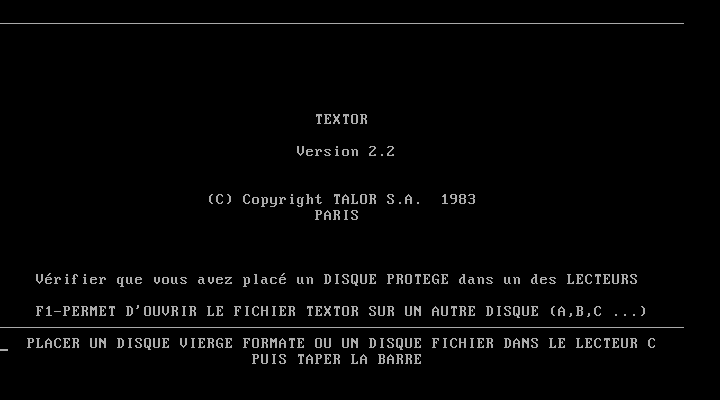
I was able to find a copy of Textor 2.2.

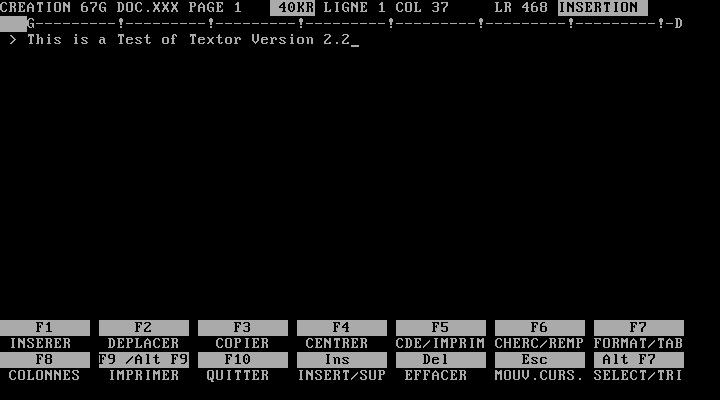
It took me a few minutes to figure out some of the controls. Aside being in French, it was a little different than other Word Processing software.

After a bit of playing around in the software and trying many of the functions, I saved out a few files. At first, all the files were placed into a pair of files, called “TEXTOR.TEX” and “TEXTOR.LIG”. Creating a new document and saving would just update these two files. They seem to function in the same way the library function works in the Windows 6.0 version.

% hexdump -C TEXTOR.TEX | head
00000000 00 00 00 00 00 00 00 00 00 00 00 00 00 00 00 00 |................|
*
00000080 00 00 cd 00 60 00 05 00 00 00 54 45 00 00 00 00 |....`.....TE....|
00000090 00 00 00 00 00 00 54 45 58 54 4f 52 20 20 00 00 |......TEXTOR ..|
000000a0 00 00 00 00 00 00 00 00 00 00 00 00 00 00 00 00 |................|
*
000000c0 00 00 cd 00 62 00 05 00 ff ff 54 45 00 00 00 00 |....b.....TE....|
000000d0 00 00 00 00 00 00 54 45 58 54 4f 52 20 20 00 00 |......TEXTOR ..|
000000e0 00 00 00 00 00 00 00 00 00 00 00 00 00 00 00 00 |................|

% hexdump -C TEXTOR.LIG | head
00000000 00 00 00 00 00 00 00 00 00 00 00 00 00 00 00 00 |................|
*
00002f80 ff ff 1f 54 65 73 74 69 6e 67 0d 0a 0d 20 20 20 |...Testing... |
00002f90 20 20 20 20 20 20 20 20 20 20 20 20 20 20 20 20 | |
*
00003000 ff ff 1f 54 68 69 73 20 69 73 20 61 20 54 65 73 |...This is a Tes|
00003010 74 20 6f 66 20 54 65 78 74 6f 72 20 56 65 72 73 |t of Textor Vers|
00003020 69 6f 6e 20 32 2e 32 0d 0a 0d 20 20 20 20 20 20 |ion 2.2... |
00003030 20 20 20 20 20 20 20 20 20 20 20 20 20 20 20 20 |

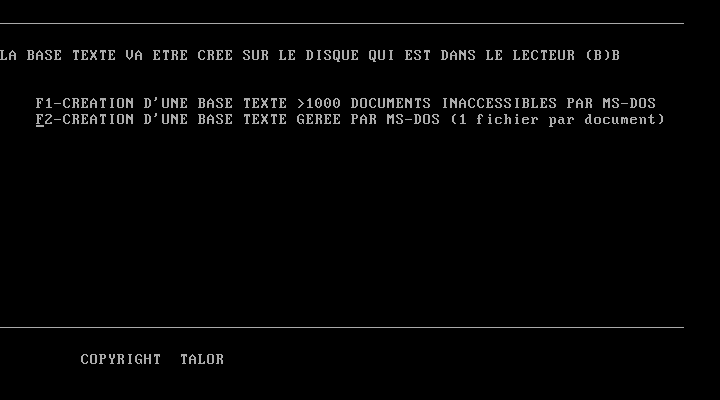
It seems the text portion of my document was saved in the LIG file and additional data, probably some description and user names into the TEX file. I then stumbled on a setup executable in the same directory that gave me some options.

THE TEXT DATABASE WILL BE CREATED ON THE DISK IN DRIVE (B)B
F1 – CREATING A TEXT DATABASE >1000 DOCUMENTS INACCESSIBLE BY MS-DOS
F2 – CREATING A TEXT DATABASE MANAGED BY MS-DOS (1 file per document)

Ok, so the software has two options. One for creating a database of text which we discovered above, and setting the software to create one file per document. When I selected F2, I was greeted with an error, which took me a minute to realize the first line required a disk to be in Drive B. Once I got it all configured I was able to save out a single file for a document.

% hexdump -C TEST02.BAT | head
00000000 1f 54 65 73 74 69 6e 67 20 32 6e 64 20 4f 70 74 |.Testing 2nd Opt|
00000010 69 6f 6e 0d 0a 1a 00 00 00 00 00 00 00 00 00 00 |ion.............|
00000020 00 00 00 00 00 00 00 00 00 00 00 00 00 00 00 00 |................|

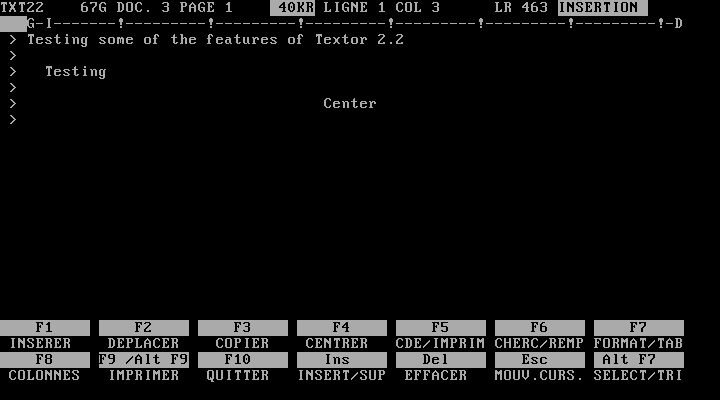
Not much to go on, the file is just full of plain ASCII other than a simple byte at the beginning and some new line bytes at the end. The BAT extension is a little unexpected, usually see those as batch scripts in DOS. Let’s try a more complex text document. More text, a tab, centering a line…..

% hexdump -C TXT223.BAT | head 
00000000 02 27 08 47 2d 49 2d 2d 2d 2d 2d 2d 2d 21 2d 2d |.'.G-I-------!--|
00000010 2d 2d 2d 2d 2d 2d 2d 21 2d 2d 2d 2d 2d 2d 2d 2d |-------!--------|
00000020 2d 21 2d 2d 2d 2d 2d 2d 2d 2d 2d 21 2d 2d 2d 2d |-!---------!----|
00000030 2d 2d 2d 2d 2d 21 2d 2d 2d 2d 2d 2d 2d 2d 2d 21 |-----!---------!|
00000040 2d 2d 2d 2d 2d 2d 2d 2d 2d 21 2d 44 0d 0a 02 27 |---------!-D...'|
00000050 08 23 46 37 32 2c 30 30 2c 30 30 2c 30 30 2c 30 |.#F72,00,00,00,0|
00000060 30 2c 30 30 2c 34 30 2c 30 31 2c 30 31 2c 30 31 |0,00,40,01,01,01|
00000070 2c 30 32 2c 30 30 2c 37 32 2c 30 30 2c 30 30 2c |,02,00,72,00,00,|
00000080 30 30 2c 30 30 2c 30 30 2c 30 32 2c 23 0d 0a 54 |00,00,00,02,#..T|
00000090 65 73 74 69 6e 67 20 73 6f 6d 65 20 6f 66 20 74 |esting some of t|

That gave me more to work with. But a bit of a mess. These seem to be more like some of the other earlier DOS word processing programs, they used ASCII, but embedded their own formatting codes throughout which only their software understood. This is why it is difficult to identify older WordStar or WordPerfect files.

This was a fun format to explore, I did learn a little French, but also had to dig deep to find the little information I was able to mention here. I would love to find a copy of Textor 4 or 5, which I believe are different than versions 2 & 3 and different than the Windows 6 version I have. There is one edition available on eBay currently, but seems to be the first version. If someone has the means in France this would be good to preserve. Feel free to look at the samples I made.

Page Perfect

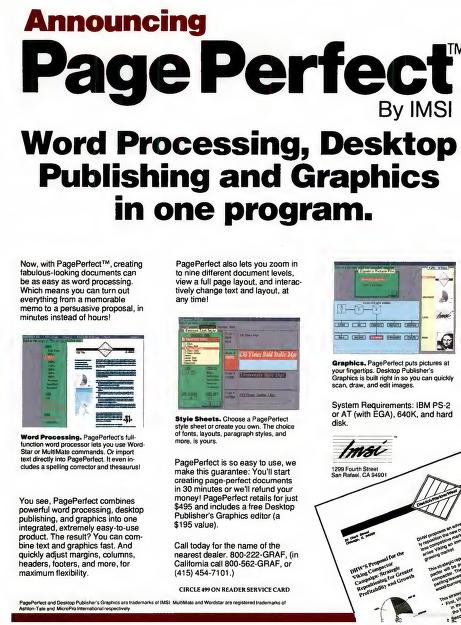
PagePerfect: the Promise of Desktop Publishing Realized

Now, PagePerfect has arrived. And suddenly PC desktop publishing is a lot
simpler and less expensive, because PagePerfect integrates desktop
publishing, word processing, and graphics editing all in one package.

The 1980’s was a time of growth in personal computing and one industry was progressing rapidly. Previously in order to get printed more than just words, you had to use a complex arrangement of type, masking, screening; all done by hand. Now with a personal computer you could design and print well designed layouts. There were many software applications who came on the scene in these early days. My personal favorite was QuarkXPress, I used the software in the early 1990’s and spent the next few years working in a commercial printshop using the software. What once took a team of skilled workers to set copy, mask, blueline, etc took only one person with the right software.

I recently came across a set of floppy disks for some software called PagePerfect, by a well known software company IMSI.

This article in a 1988 PC Magazine announces this new revolutionary software. This was early on in the days of computer desktop publishing and even on a DOS system the software was powerful. It didn’t always get the best reviews in terms of ease of use, but it was well built. The company behind this powerful software wasn’t IMSI as you might expect, it was programed by a different company, Beyond Words, started by three former MicroPro employees, the makers of WordStar. Beyond Words liked to “leave sales to others” which included IMSI and a big contract with Canon called their Desktop Publishing System.

IMSI was able to market the software well and was well priced. The name PagePerfect didn’t last long and soon after they renamed the software IMSI Publisher in 1989. I’m not 100% sure, but it might have to do with WordPerfect asserting some copyright to the name around that same time. By 1990, the software was not seen much anymore, but another name pops up, Beyond Words Composer 2.0.

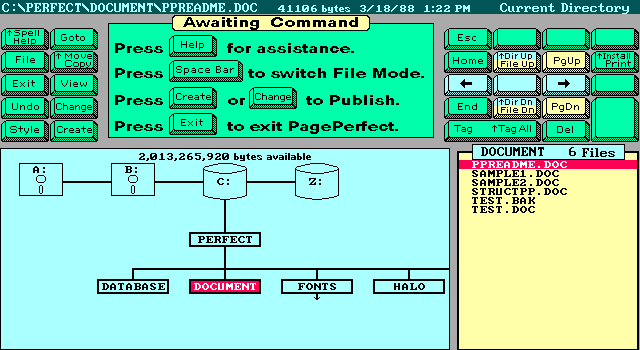
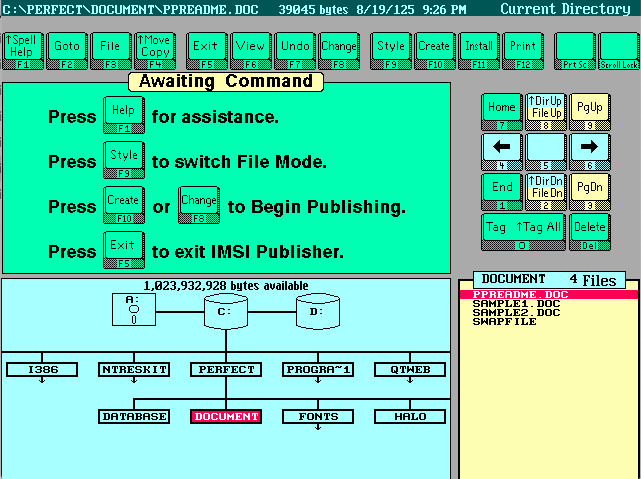
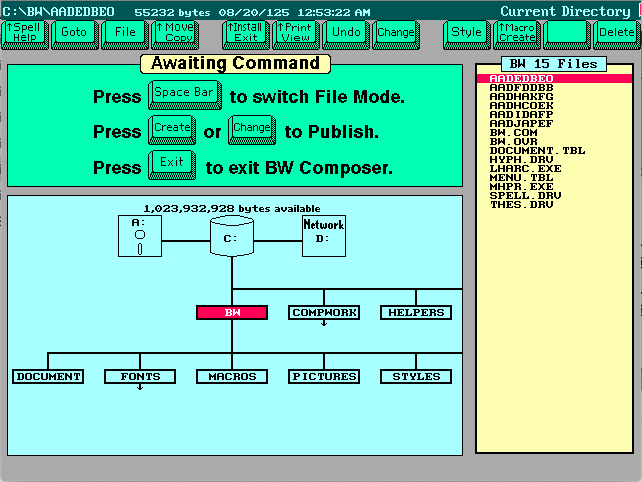
All three versions of the software have a very similar interface.

But the one thing they all have in common is their file formats. Unfortunately they used the same extensions many word processing software used during this time and after. .DOC and also .STY which was used frequently by Microsoft Word as well. It makes sense, a Document is shortened to DOC and a Stylesheet is shortened to STY. So if you have any DOC files which don’t open in Word, you might look here. The other problem is the file format used is not plain text and is in a binary proprietary format.

hexdump -C TEST.DOC | head
00000000 5b 42 57 44 42 5d 00 00 00 00 00 31 2e 30 30 00 |[BWDB].....1.00.|
00000010 00 00 00 00 00 00 3c af 13 5b 1e 00 00 00 95 63 |......<..[.....c|
00000020 00 00 5e 00 00 00 18 00 00 00 01 00 76 00 00 00 |..^.........v...|
00000030 68 01 00 00 0a 00 de 01 00 00 00 00 00 00 00 00 |h...............|
00000040 de 01 00 00 8b 60 00 00 1e 00 69 62 00 00 2c 01 |.....`....ib..,.|
00000050 00 00 1e 00 00 00 00 00 00 00 00 00 00 00 5b 42 |..............[B|
00000060 57 44 4f 43 5d 00 00 00 00 32 2e 30 39 00 00 00 |WDOC]....2.09...|
00000070 00 00 00 00 0a 00 00 00 00 00 00 00 00 00 00 00 |................|
00000080 00 00 00 00 00 00 00 00 00 00 00 00 00 00 00 00 |................|
00000090 00 00 00 00 6c 00 00 00 00 00 00 00 00 00 00 00 |....l...........|

The one positive is the very obvious strings of text in the header. [BWDB] and [BWDOC], which one could infer as Beyond Words DB and Beyond Words Document. A later Beyond Words Composer document has the same header but a higher version number.

hexdump -C WELCOME.DOC | head
00000000 5b 42 57 44 42 5d 00 00 00 00 00 31 2e 30 30 00 |[BWDB].....1.00.|
00000010 00 00 00 00 00 00 aa 14 56 16 29 00 00 00 30 84 |........V.)...0.|
00000020 00 00 5e 00 00 00 18 00 00 00 01 00 76 00 00 00 |..^.........v...|
00000030 b0 01 00 00 0c 00 26 02 00 00 00 00 00 00 00 00 |......&.........|
00000040 26 02 00 00 70 80 00 00 29 00 96 82 00 00 9a 01 |&...p...).......|
00000050 00 00 29 00 00 00 00 00 00 00 00 00 00 00 5b 42 |..)...........[B|
00000060 57 44 4f 43 5d 00 00 00 00 33 2e 30 31 00 00 00 |WDOC]....3.01...|
00000070 00 00 00 00 0c 00 00 00 00 00 00 00 00 00 00 00 |................|
00000080 00 00 00 00 00 00 00 00 00 00 00 00 00 00 00 00 |................|
00000090 00 00 00 00 6e 00 00 00 00 00 00 00 00 00 00 00 |....n...........|

If we look at the Stylesheets we see the same patterns.

hexdump -C SAMPLE.STY | head   
00000000 5b 42 57 44 42 5d 00 00 00 00 00 31 2e 30 30 00 |[BWDB].....1.00.|
00000010 00 00 00 00 00 00 51 10 76 10 09 00 00 00 da 2c |......Q.v......,|
00000020 00 00 5e 00 00 00 18 00 00 00 01 00 76 00 00 00 |..^.........v...|
00000030 68 01 00 00 0a 00 de 01 00 00 00 00 00 00 00 00 |h...............|
00000040 de 01 00 00 a2 2a 00 00 09 00 80 2c 00 00 5a 00 |.....*.....,..Z.|
00000050 00 00 09 00 00 00 00 00 00 00 00 00 00 00 5b 42 |..............[B|
00000060 57 44 4f 43 5d 00 00 00 00 32 2e 30 39 00 00 00 |WDOC]....2.09...|
00000070 00 00 00 00 0a 00 00 00 00 00 00 00 00 00 00 00 |................|
00000080 00 00 00 00 00 00 00 00 00 00 00 00 00 00 00 00 |................|
00000090 00 00 00 00 6c 00 00 00 00 00 00 00 00 00 00 00 |....l...........|

I haven’t been able to find any specific bytes which differentiate the Stylesheets from the Documents. They may be the same format, but for now we will consider them the same. These stylesheets seem to function as a template which are often the same format.

Apart from the document layout, the software can also create and use databases. Which appear to be a similar format but with different offsets.

hexdump -C DOCUMENT.TBL | head
00000000 5b 42 57 44 42 5d 00 00 00 00 00 31 2e 30 30 00 |[BWDB].....1.00.|
00000010 00 00 00 00 00 00 6b 10 36 00 00 00 18 00 00 00 |......k.6.......|
00000020 01 00 4e 00 00 00 68 01 00 00 0a 00 b6 01 00 00 |..N...h.........|
00000030 00 00 00 00 00 00 5b 42 57 44 4f 43 5d 00 00 00 |......[BWDOC]...|
00000040 00 32 2e 30 39 00 00 00 00 00 00 00 0a 00 00 00 |.2.09...........|
00000050 00 00 00 00 00 00 00 00 00 00 00 00 00 00 00 00 |................|
00000060 00 00 00 00 00 00 00 00 00 00 00 00 6c 00 00 00 |............l...|
00000070 00 00 00 00 00 00 00 00 00 00 00 00 00 00 00 00 |................|

Prior to me diving into this format, the only tool which had some information on this format was TrID, which identified all the DOC and STY files as Beyond Words Composer style. Which is mostly true. Hopefully with this background you can be aware of the different software names this format was used with and with some luck convert the files to something less proprietary.

Some disks that came with my PagePerfect install disks do have some personal documents created with the software, but I wonder how much this software really was used in the late 1980’s and early 1990’s, because after that point, you don’t hear about the software anymore. There is some references to the software getting absorbed into another software, IBM DisplayWrite 5/2. I would be curious if others have come across this file format.

Script Writing

A few of you may remember a couple years ago reading in a Vice article about Eric Roth and his use of an old DOS only software program for writing all his Hollywood scripts. The Vice article was based on some earlier reporting in 2014 about his writing process. You can watch the full interview of Eric Roth on YouTube.

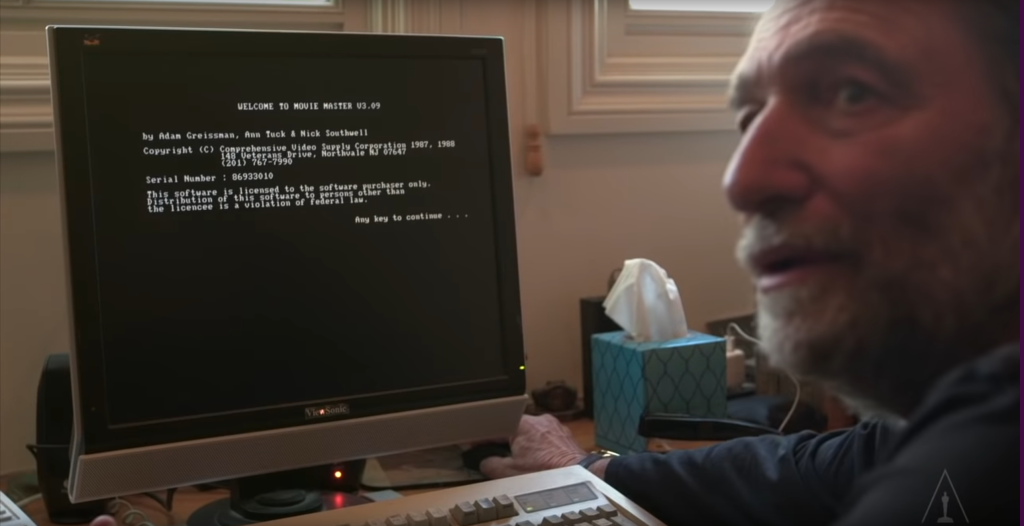
I remember seeing a link to the Vice article a couple years ago and finding the screenwriters use of an old DOS program, Movie Master, funny and interesting. He says in his interview that out of half superstition and half fear of change he prefers to use this very old software to write his screenplays. It’s so old and obsolete, he can’t even email the files to Hollywood. He has to print them out and have the studio scan them into modern software for use. The interview shows the screen of his old Windows computer and you can see the software he is using.

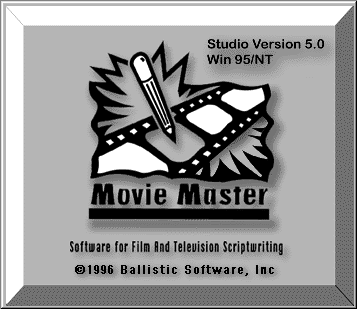
Of course because I love researching obsolete software and formats so much, I wanted to know if the scripts generated by “Movie Master”, version 3.09, are in a format that needed to be documented. I was a little surprised that this version of Movie Master was no where to be found. It was on none of the old abandoned software sites. Not on Internet Archive, no where it seemed. I did find a later version of Movie Master, version 5, but found this software was not the same thing.

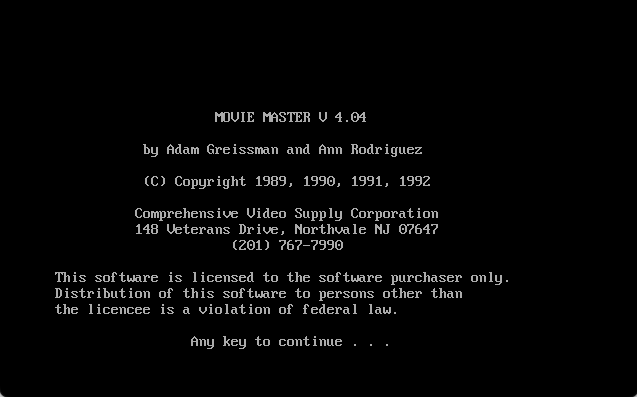
The original programmer of Movie Master was Adam Greissman, which you can clearly see in the screenshot above. The software was copyright Comprehensive Video Supply in the 1980’s, but the Movie Master version 5 was developed by Ballistic Software, Inc, which was also known as “Comprehensive Cinema Software” or “Hollywood Cinema Software” later in the 1990’s.

According to a very in depth article by Daniel Plagens, Reinventing the Typewriter, mentions Adam Greissman not wanting to move the software from DOS to Windows as he didn’t feel there was enough of a market at the time. As it turns out the founder of Comprehensive Video Supply, Jules Leni, got a lot of pressure from users of Movie Master after Greissman, who left the company in 1991, to develop a Windows and Macintosh version of the software. They released this new version in October of 1996.

Let’s take a look at a couple of example files from version 5.

hexdump -C Scene.scr | head
00000000 11 0d 0a 32 2e 20 20 20 20 15 0d 0a 15 0d 0a 15 |...2. .......|
00000010 0d 0a 15 0d 0a 11 0d 0a 10 0d 0a 15 0d 0a 15 0d |................|
00000020 0a 15 0d 0a 10 0d 0a 46 41 44 45 20 49 4e 3a 15 |.......FADE IN:.|
00000030 0d 0a 54 68 65 20 66 6f 6c 6c 6f 77 69 6e 67 20 |..The following |
00000040 22 73 63 72 69 70 74 6c 65 74 22 20 64 65 6d 6f |"scriptlet" demo|
00000050 6e 73 74 72 61 74 65 73 20 68 6f 77 20 4d 6f 76 |nstrates how Mov|
00000060 69 65 20 4d 61 73 74 65 72 20 0d 0a 63 61 6e 20 |ie Master ..can |
00000070 62 65 20 75 73 65 64 20 74 6f 20 6f 75 74 6c 69 |be used to outli|
00000080 6e 65 20 73 63 65 6e 65 73 2e 20 20 4f 6e 63 65 |ne scenes. Once|
00000090 20 79 6f 75 20 68 61 76 65 20 66 69 6e 69 73 68 | you have finish|

hexdump -C MM5-s01.scr | head
00000000 11 0d 0a 31 2e 20 20 20 20 15 0d 0a 15 0d 0a 15 |...1. .......|
00000010 0d 0a 15 0d 0a 11 0d 0a 10 0d 0a 15 0d 0a 15 0d |................|
00000020 0a 15 0d 0a 10 0d 0a 54 45 53 54 49 4e 47 15 0d |.......TESTING..|
00000030 0a 7e 60 21 40 23 24 25 5e 26 2a 28 29 2d 2b 7c |.~`!@#$%^&*()-+||
00000040 3d 2d 54 65 43 66 4d 74 0d 0a 01 00 00 07 00 02 |=-TeCfMt........|
00000050 00 00 00 00 00 00 01 00 00 01 00 00 01 00 00 01 |................|
00000060 00 00 01 00 00 01 00 00 01 00 00 01 00 00 01 00 |................|
00000070 00 01 00 00 bf 03 00 00 0c 00 43 6f 75 72 69 65 |..........Courie|
00000080 72 00 00 00 00 00 00 00 00 00 00 00 00 00 00 00 |r...............|
00000090 00 00 00 00 00 00 00 00 00 30 00 00 00 00 00 00 |.........0......|

Version 5 of Movie Master uses the extension SCR, which one could assume is short for “Script”. There does appear to be a header before any readable text starts, so that will be helpful in identification. Currently there is only one PUID, x-fmt/100, in PRONOM with the extension SCR, which happens to be for an AutoCAD script and has no signature, so anything you ask DROID or Siegfried to identify with the SCR extension will default to an AutoCAD script, which is frustrating. According to the File Format Wiki, there are quite a few formats with the SCR extension. More work to be done there for sure.

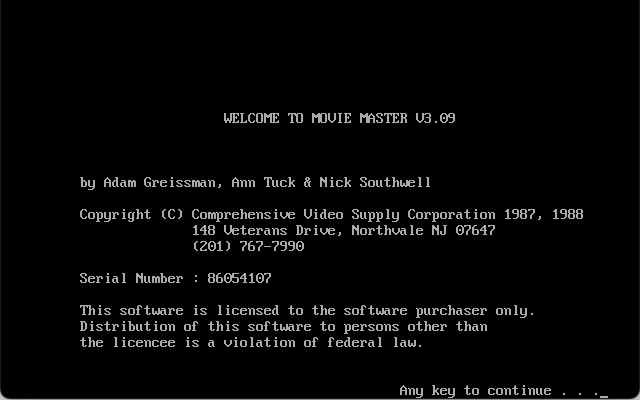
So I tried for a few weeks to find a copy of Movie Master version 3.09, I even put in a eBay favorite search for the name so it would alert me to a copy being sold, but no such luck. I gave up for awhile, then recently someone posted a link to a large collection of early warez. Warez is the name given to software that has been illegally copied. When I followed the link and searched though the vast amount of software titles, I got excited to see a couple matches to “Movie Master”. After a little wrangling of some downloads, I spun up a copy of DOSBox and low and behold, Movie Master 3.09!

Welcome to Movie Master V3.09 about screen

A lot of people have compared the old DOS scriptwriting tools to early word processors like Word, Perfect Writer, WordStar, etc. They did much of the same thing, but with special controls for helping with scenes, characters, indents, and everything writers needed to make some of the best Hollywood films out there. As Daniel Plagens noted:

The program proved popular for many years. Greissman estimates they sold over 10,000 units—“saturating the market,” as he put it—and recalls seeing help wanted ads in Hollywood Reporter and Variety where knowledge of Movie Master was a hiring requirement. He visited the sets of Days of Thunder and Hunt for Red October to help their writers and production teams acclimate to Movie Master.

Makes me wonder where all the old scripts from Hollywood movies are located in their electronic form? I am sure Eric Roth probably has quite the collection of different scripts he has written. I sure hope he backs them up and donates them to a library in the future.

Well, let’s take a look at a couple sample files from Movie Master version 3 and version 4. Version 4.04 was also in the collection uploaded to Internet Archive.

hexdump -C TEST3.SCR | head 
00000000 33 2e 30 39 0a 00 00 00 00 31 00 00 00 00 00 00 |3.09.....1......|
00000010 31 00 00 00 00 00 00 0a 00 4e 41 4d 45 20 3f 0a |1........NAME ?.|
00000020 ff 53 43 52 45 45 4e 0a 2a 42 01 19 3c 01 1e 37 |.SCREEN.*B..<..7|
00000030 01 1c 2f 01 14 25 01 18 24 01 39 4c 01 31 42 01 |../..%..$.9L.1B.|
00000040 35 41 01 0a 46 01 0a 46 01 3d 4b 01 02 00 01 0a |5A..F..F.=K.....|
00000050 03 00 54 65 73 74 69 6e 67 20 4d 6f 76 69 65 20 |..Testing Movie |
00000060 4d 61 73 74 65 72 20 76 65 72 73 69 6f 6e 20 33 |Master version 3|
00000070 2e 30 39 11 11 31 11 31 0a |.09..1.1.|

hexdump -C TEST.SCR
00000000 34 2e 30 34 0a 00 00 00 00 31 00 00 00 00 00 00 |4.04.....1......|
00000010 31 00 00 00 00 00 00 00 00 00 00 00 00 00 00 0a |1...............|
00000020 ff 0a 2a 42 01 00 19 3c 01 00 1e 37 01 00 1c 2f |..*B...<...7.../|
00000030 01 00 14 25 01 00 18 24 01 00 39 4c 01 00 31 42 |...%...$..9L..1B|
00000040 01 00 35 41 01 00 0a 46 01 00 0a 46 01 00 3d 4b |..5A...F...F..=K|
00000050 01 00 0a 18 01 00 0a 46 01 00 02 00 00 54 68 69 |.......F.....Thi|
00000060 73 20 69 73 20 61 20 74 65 73 74 20 6f 66 20 4d |s is a test of M|
00000070 6f 76 69 65 20 4d 61 73 74 65 72 20 53 63 72 69 |ovie Master Scri|
00000080 70 74 20 77 72 69 74 69 6e 67 20 73 6f 66 74 77 |pt writing softw|
00000090 61 72 65 2e 0a 01 03 00 00 31 0a 01 00 00 00 00 |are......1......|
000000a0 0a 03 01 0a |....|

hexdump -C COVER.SCR | head
00000000 33 2e 30 35 0a 01 00 00 00 31 00 00 00 00 00 00 |3.05.....1......|
00000010 31 00 00 00 00 00 00 0a ff 43 4f 56 45 52 0a 2a |1........COVER.*|
00000020 42 01 19 3c 01 1e 37 01 1c 2f 01 14 25 01 18 24 |B..<..7../..%..$|
00000030 01 39 4c 01 31 42 01 35 41 01 0a 46 01 0a 46 01 |.9L.1B.5A..F..F.|
00000040 3d 4b 01 06 00 00 0a 03 01 31 0a 01 03 00 00 11 |=K.......1......|
00000050 11 11 11 11 11 11 11 11 11 11 11 11 11 11 11 11 |................|
00000060 11 11 11 11 11 11 11 11 20 20 20 20 20 20 20 20 |........ |
00000070 20 20 20 20 20 20 20 20 20 20 20 20 20 22 4d 65 | "Me|
00000080 65 74 20 74 68 65 20 44 72 61 63 75 6c 61 73 22 |et the Draculas"|
00000090 11 11 11 11 11 20 20 20 20 20 20 20 20 20 20 20 |.....

hexdump -C DRAC2.SCR | head
00000000 34 2e 30 30 0a 01 00 2b 00 36 00 00 00 00 00 00 |4.00...+.6......|
00000010 35 00 00 00 00 00 00 00 00 00 00 00 00 00 00 0a |5...............|
00000020 00 42 4f 42 0a 01 54 45 44 0a 02 43 41 52 4f 4c |.BOB..TED..CAROL|
00000030 0a 03 41 4c 49 43 45 0a 04 49 47 4f 52 0a 05 44 |..ALICE..IGOR..D|
00000040 45 4e 4e 49 53 0a 06 4d 55 46 46 49 4e 0a ff 53 |ENNIS..MUFFIN..S|
00000050 43 52 45 45 4e 0a 2a 42 01 00 19 3c 01 00 1e 37 |CREEN.*B...<...7|
00000060 01 00 1c 2f 01 00 14 25 01 00 18 24 01 00 39 4c |.../...%...$..9L|
00000070 01 00 31 42 01 00 35 41 01 00 0a 46 01 00 0a 46 |..1B..5A...F...F|
00000080 01 00 3d 4b 01 00 0a 18 01 00 0a 46 01 00 02 01 |..=K.......F....|
00000090 01 35 0a 03 00 45 58 54 20 54 45 44 20 44 52 41 |.5...EXT TED DRA|

The first thing to notice is they all start with the version number of the software which wrote the file. Really nice to have, but a terrible magic header. The files also all begin (after the version number) and end with the Hex value “0A”. Which happens to be a line feed control character. So super common, but could be helpful. Another pattern is that on the 9th byte it is “31” on most of the samples and “36” on one of them. “31” is the start of the ASCII number sequence, so could be the sequence number for the script as each SCR file could only store what was in memory.

I fear the rest of the format will have the same issue most word processors had at the time which is not having a header, but lots of formatting codes which may or may not be in every file, making programatic identification difficult. Might take awhile to identify all the formatting codes, but could lead to better identification and possibly an import module for tools like LibeOffice or Final Draft.

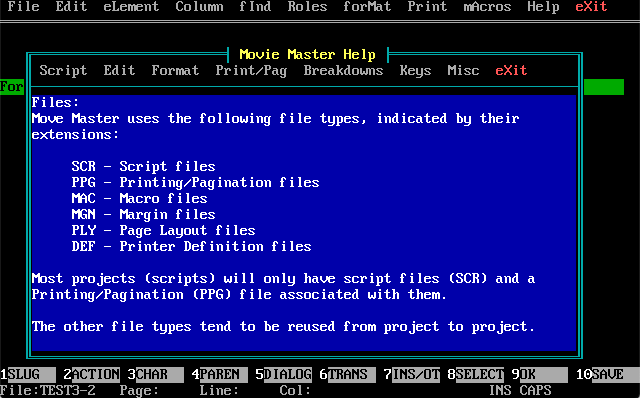
Screenshot of Movie Master 4.04 start screen

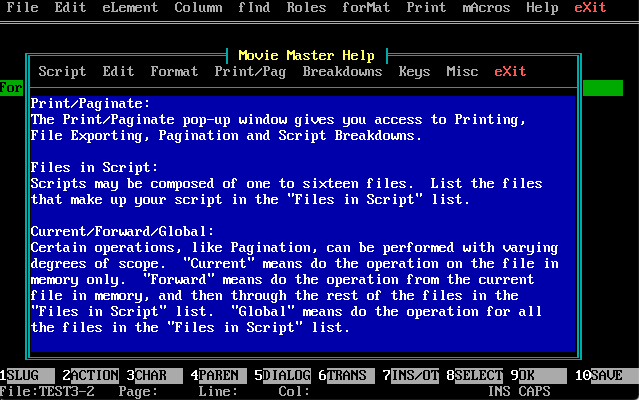
I didn’t find much different with Movie Master 4, seemed to have the same restrictions to 16 files in a script. The files from version 4 also seem to follow the same patterns from version 3. But both versions are different from the the Windows version of Movie Master, version 5. Click here for Movie Master 5 help menu on “Introduction for Movie Master DOS Users“.

There was another elusive script writing software title which adds to the confusion. Scriptware was another screenwriting software tool which seems to have had a large following. They produced a Windows and Macintosh version. It also started out for DOS and also used the SCR extension. The website is still active for the software, but hasn’t updated in 24 years. I wrote a little about in my post on PROmotion. All the demo versions out there are not useable demos, but animation demos. In this nice batch of old software on the Internet Archive I was able to find an early copy. Wasn’t able to get it to run, but the folder did have some samples.

hexdump -C SAMPLE1.SCR | head
00000000 32 5f 01 00 00 00 00 00 00 00 00 39 01 4a 5f 00 |2_.........9.J_.|
00000010 ff ff 2c 01 00 00 00 00 00 00 95 80 01 00 11 53 |..,............S|
00000020 63 72 69 70 74 77 61 72 65 20 53 63 72 69 70 74 |criptware Script|
00000030 00 00 00 00 00 00 00 00 00 00 00 00 00 00 00 00 |................|
*
000000b0 00 00 00 00 00 00 00 00 11 00 02 00 02 00 14 00 |................|
000000c0 12 00 6f 02 f9 04 0b 00 7b 04 01 00 05 00 00 02 |..o.....{.......|
000000d0 00 11 00 00 00 0c 00 00 00 06 00 ed 01 05 06 00 |................|
000000e0 00 00 00 00 08 00 0b 00 00 00 04 00 00 00 04 00 |................|
000000f0 82 00 01 01 00 00 00 00 00 00 00 00 00 00 00 00 |................|

hexdump -C SAMPLE2.SCR | head
00000000 0b 53 63 72 69 70 74 77 61 72 65 1a 95 80 04 80 |.Scriptware.....|
00000010 1e 53 63 72 69 70 74 77 61 72 65 20 53 63 72 69 |.Scriptware Scri|
00000020 70 74 20 32 2e 32 33 3a 34 3b 37 30 32 32 31 00 |pt 2.23:4;70221.|
00000030 00 00 00 00 00 00 00 00 00 00 00 00 00 00 00 00 |................|
*
000000a0 00 00 00 00 00 00 00 00 00 00 11 00 02 00 02 00 |................|
000000b0 11 00 00 00 34 02 01 05 0b 00 89 04 01 00 05 00 |....4...........|
000000c0 00 02 00 11 00 00 00 0b 00 00 00 06 00 aa 01 05 |................|
000000d0 06 00 00 00 00 00 08 00 0c 00 00 00 05 00 00 00 |................|
000000e0 05 00 8a 00 01 01 00 00 00 00 00 00 00 00 00 00 |................|

Luckily, they make it quite easy to identify these SCR files. ScriptWare was very popular and continued on with Windows and Macintosh versions. Later on, the format was changed along with the extension, which changed to SW3.

The SCR extension has been used often. On my desktop they default as a Paintbrush document. Apparently SCR is sometimes used as an extension for the ZSoft Paintbrush (PCX) format. It is also used on older postscript fonts on the Macintosh as a Type 1 screen font. Can also be a screensaver on Windows, but watch out, they can hide malicious code. You get the idea, SCR is a very common extension, identifying it up front can help avoid problems later!

Moral of the story is to never give up searching for old software and even though illegal copying of software should be avoided, I am grateful to those who help save abandoned software. Without them many titles would be lost.

I don’t have a good signature for these formats yet, but you can find a few samples on my GitHub page.